





Why do pupils change size?
Pupils shrink in bright light and widen in the dark. How the pupil reflex works, other everyday reasons, and when a change needs a doctor.
New articles by email
One email a week.
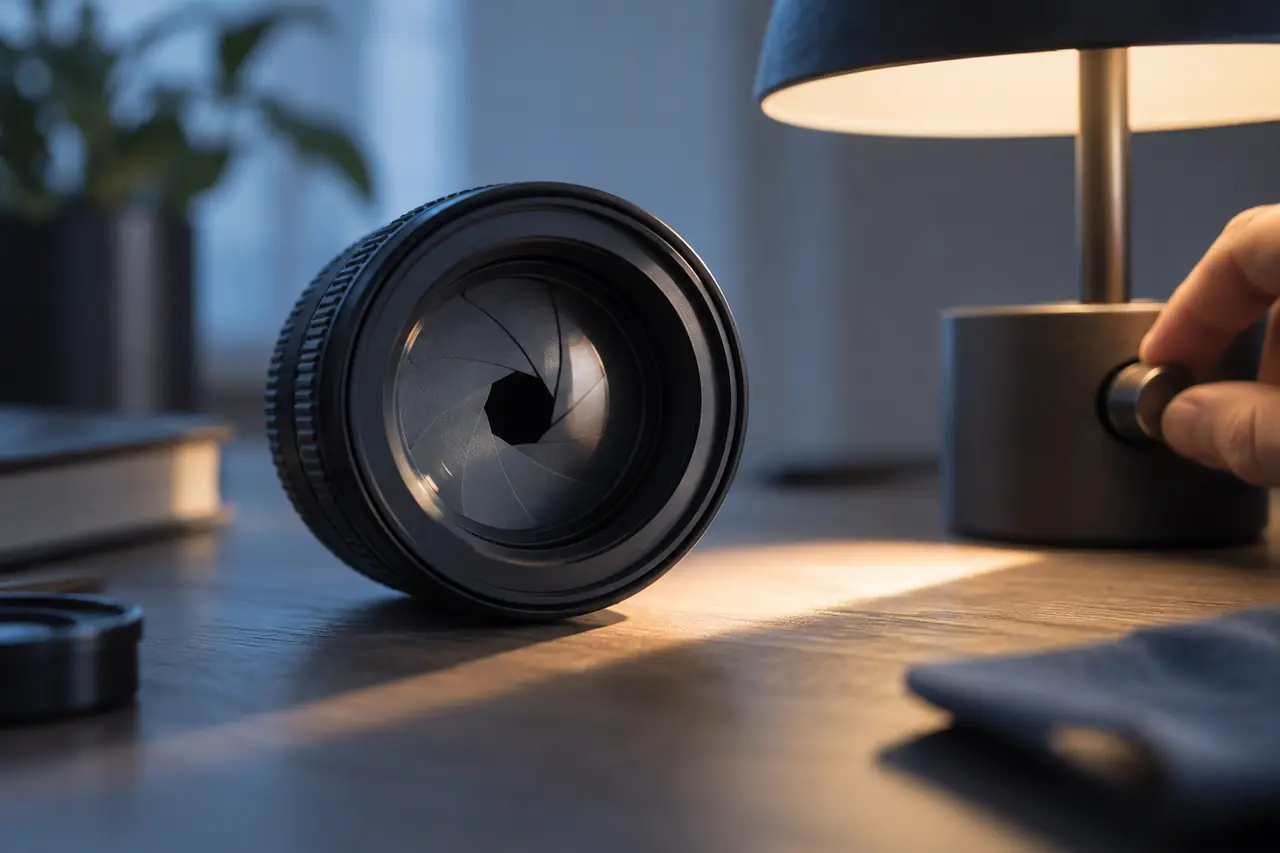
The pupil is the black circle in the middle of your eye. It's not a thing so much as a gap: an opening in the iris that lets light through to the back of the eye. The American Academy of Ophthalmology (AAO) explains that muscles in the iris widen or narrow the pupil to control how much light reaches the retina.
How the eye works shows where the pupil and iris sit, and night driving and glare covers how the eyes cope after dark.
The light reflex
Cleveland Clinic describes the pupillary light reflex: in bright light, the pupil narrows to protect the retina; in dim light or darkness, it widens to let more light in. It happens automatically, in a fraction of a second, without you deciding anything.
One detail surprises many people. Cleveland Clinic explains that the reflex affects both eyes even if the change in light reaches only one. Shine a light into one eye and both pupils narrow. Eye care professionals check this during an exam.
Other everyday reasons pupils change
- Strong emotion or pain. Cleveland Clinic notes these can trigger the reflex too.
- Dilating eye drops. The AAO says the drops used at eye exams usually wear off in 4 to 8 hours, though sometimes it takes up to 24. See how long eye dilation lasts.
- Some medicines. The AAO lists several types that can widen pupils, including some antihistamines, decongestants, motion sickness medicines and some antidepressants. If you've noticed a change after starting a medicine, mention it to your doctor or pharmacist.
- Recreational drugs. The AAO notes several can widen the pupils.
Pupils at an eye exam
Checking the pupils is a routine part of an eye exam. The American Academy of Ophthalmology describes the doctor shining a bright light into each eye to see how the pupils react: they normally get smaller, and widening or no response may point to a problem. It's quick and painless. See what happens during an eye exam.
Pupils in photos
Pupil size changes how eyes look in photos. Bright light makes pupils small and shows more of the iris; dim light makes them large. That's one reason photos taken in different light are hard to compare, and why our guide to consistent eye photos suggests the same spot and light each time. Flash photos can also make large pupils glow red. See why eyes look red in flash photos.
Ocufuse doesn't measure your pupils or judge photos. If you're keeping photos for an appointment, note the lighting with each one so your doctor can read them in context.
When a change needs checking
The AAO advises contacting a doctor if you notice a sudden change to one or both pupils, or if your pupils frequently stay dilated. Cleveland Clinic notes that pupils that don't shrink in light can be a symptom of serious conditions such as stroke.
- Your pupils often look larger or smaller than usual
- You've noticed a difference after a new medicine
- One pupil has looked a little bigger for a long time
- A sudden change in one or both pupils
- Unequal pupils after a head injury
- Pupil changes with a drooping eyelid, double vision or severe headache
- Pupil changes with weakness, confusion or trouble speaking
The AAO says an eye injury that changes the pupil needs immediate medical attention.
Read more by topic
Common questions
Why do pupils get smaller in bright light?
Cleveland Clinic explains the pupillary light reflex: the pupil narrows in bright light to protect the retina and widens in dim light to let more light in.
Why did both pupils shrink when light shone in one eye?
Cleveland Clinic says the reflex affects both eyes even when the light reaches only one. Eye care professionals check this in an exam.
What else makes pupils bigger?
Strong emotion or pain, dilating eye drops, and some medicines including certain antihistamines, decongestants and motion sickness medicines, according to Cleveland Clinic and the American Academy of Ophthalmology.
When should I worry about my pupils?
The American Academy of Ophthalmology advises contacting a doctor about a sudden change in one or both pupils or pupils that often stay dilated. A sudden change with headache, a drooping eyelid, weakness or confusion needs emergency care.
Sources
End of article