



How long does eye dilation last?
Dilating drops usually wear off within a few to several hours. What affects how long it lasts, what it feels like, and how to plan your day.
New articles by email
One email a week.
For your eye doctor to look inside your eyes, the American Academy of Ophthalmology (AAO) explains, your pupils need to be wide open. Dilating drops do that, and they also stop the pupils shrinking when the doctor shines a light in. The trade-off is a few hours of blurry, light-sensitive vision.
Why pupils change size explains what the drops act on, and optometrist vs ophthalmologist vs optician explains who you might see for a dilated exam.
The usual timeline
- 0 minDrops go in
- 20 to 30 minPupils fully open
- ExamDoctor checks the retina and optic nerve
- A few to several hoursBlur and light sensitivity fade
The AAO says the effects of dilating drops last a few to several hours. Another AAO page puts it at usually 4 to 8 hours, and sometimes up to 24. The National Eye Institute (NEI) describes blurry vision and light sensitivity for a few hours after the exam.
What affects how long it lasts
- The drops used. The AAO says each type has its own duration, and using two kinds together makes the effect last longer.
- Eye colour. Light-coloured eyes (blue, green or hazel) dilate faster than brown eyes, and dilation usually lasts longer in people with lighter eyes.
- Age. Dilation can last longer in children and young adults. The AAO notes a child's eyes may occasionally stay dilated for more than 24 hours.
Your eye doctor can tell you what to expect for the drops they used.
What it feels like
- Blurry vision, especially for close things like your phone or a menu
- Bright light feeling glaring, outdoors or under strong lights
The AAO notes the blur is often worse for close objects, so reading is usually the hardest part.
Planning your day
- Arrange a lift home or use public transport
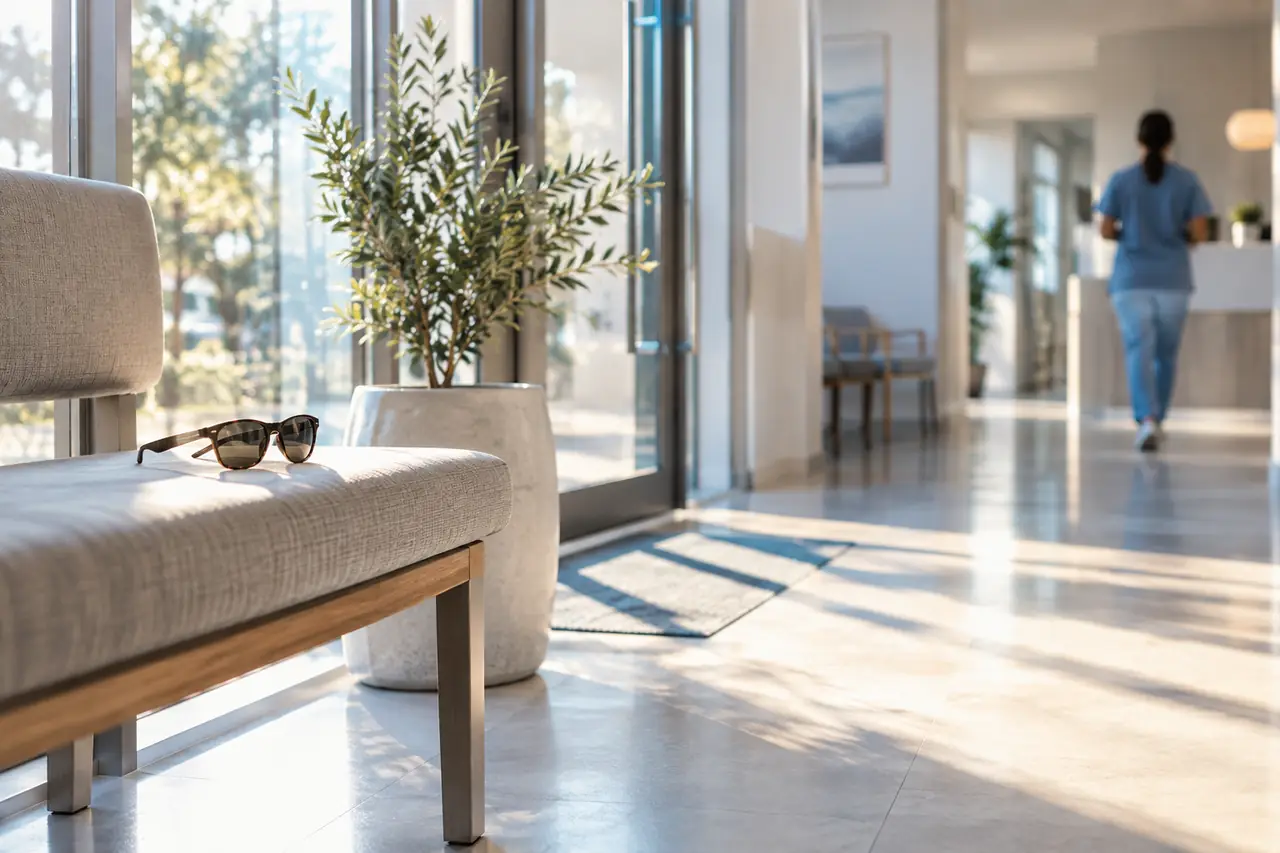
- Bring sunglasses for the glare
- Plan screen-light or reading-free time for a few hours
- Avoid booking close work straight afterwards
- For children, ask whether they'll be fine back at school
Increasing your phone's text size helps if you need to use it. Screens may feel glaring, so turn the brightness down. See screen glare and brightness.
Children and dilation
Children are often dilated at eye exams, and the AAO notes that the effect can last longer in children and young adults, occasionally more than 24 hours. It's worth asking the practice how long to expect, and whether your child will be comfortable going back to school or nursery afterwards. Sunglasses or a hat with a brim help with bright light on the way home. See when a child should have an eye exam.
Questions to ask when you book
- Will my eyes be dilated at this appointment?
- Roughly how long should I plan for the effects to last?
- Is it safe for me to drive home, or should I arrange a lift?
Why dilation is worth it
The NEI calls a dilated eye exam the only way to check for some eye diseases early, before they cause symptoms. A wider pupil gives the doctor a much better view of the retina and optic nerve. See what happens during an eye exam.
When to call your eye doctor
The AAO advises contacting a doctor if your pupils frequently stay dilated, or if you notice a sudden change to one or both pupils. If your vision hasn't returned to normal by the next day, or you have eye pain, redness, headache or nausea after the drops, call the practice that examined you.
Read more by topic
Common questions
How long do dilated eyes last?
The American Academy of Ophthalmology says the effects last a few to several hours, usually 4 to 8 and sometimes up to 24. Children may occasionally stay dilated longer.
How long does it take for eyes to dilate?
The American Academy of Ophthalmology says it usually takes 20 to 30 minutes for the pupils to open fully.
Can I drive after my eyes are dilated?
The American Academy of Ophthalmology says it may not be safe to drive yourself, and suggests arranging a ride home.
Why do light eyes stay dilated longer?
The American Academy of Ophthalmology notes that dilation usually lasts longer in people with lighter eyes, and that the type of drop also matters.
Can I use my phone after dilation?
Close-up blur is common, so reading is often hard. Bigger text and lower brightness help. Sunglasses help with glare outdoors.
Sources
End of article