



How the eye works: a simple guide to its parts
From the cornea at the front to the optic nerve at the back: what each part of the eye does and how light becomes the image you see.
New articles by email
One email a week.
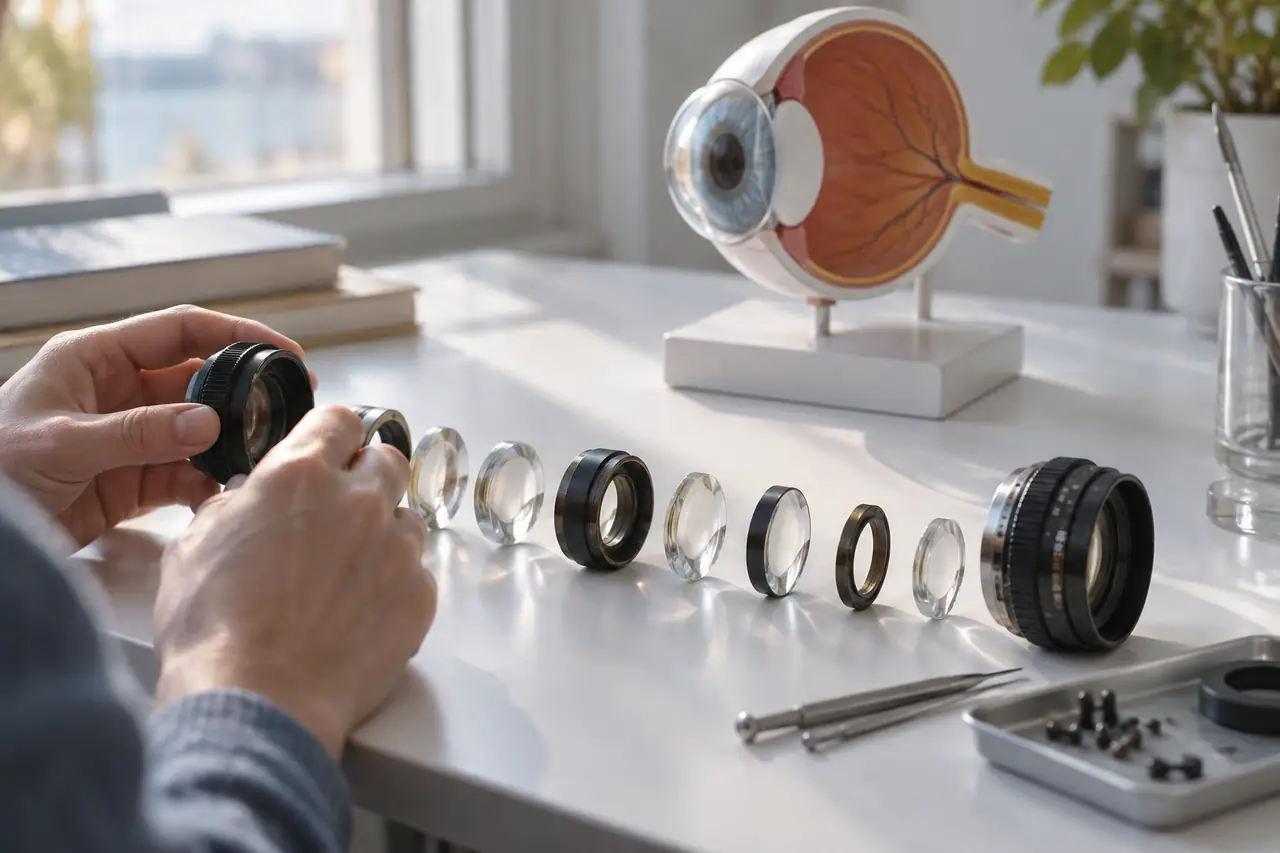
Seeing feels instant, but it's a chain of steps. The National Eye Institute (NEI) describes it this way: light enters the eye, is focused onto a light-sensitive layer at the back, is turned into electrical signals, and travels to the brain, which turns those signals into the images you see.
Knowing the names of the parts makes eye appointments easier to follow. When an optometrist mentions your cornea or retina, you'll know where they mean.
Nearsighted vs farsighted and what astigmatism is explain what happens when light doesn't focus exactly on the retina, and colour blindness explained covers the cone cells that sense colour.
The journey of light, step by step
- CorneaThe clear front layer bends light to help the eye focus.
- Pupil and irisThe iris, the coloured part, controls how much light passes through the pupil.
- LensWorks with the cornea to focus light onto the retina.
- RetinaPhotoreceptor cells turn light into electrical signals.
- Optic nerveCarries the signals to the brain, which forms the image.
The front of the eye
Cornea
The American Academy of Ophthalmology (AAO) describes the cornea as the clear, dome-shaped front portion of the eye. It does a large part of the focusing. It's also the part a contact lens sits on, and the part that feels it when something gets in your eye.
Conjunctiva and sclera
The white of the eye is the sclera, a strong layer that covers nearly the whole eyeball and anchors the muscles that move it. Over it, and lining the inside of the eyelids, is a clear membrane called the conjunctiva. When people talk about conjunctivitis, this is the layer that's inflamed.
Iris and pupil
The iris is the coloured ring. Its muscles widen or narrow the pupil, the dark opening in the middle, to control how much light reaches the back of the eye. See why pupils change size.
Inside the eye
Lens
Behind the pupil sits the lens. The AAO explains that it focuses light toward the back of the eye and changes shape to focus on close objects. As we get older, it becomes less flexible, which is why many people need reading glasses after their mid-forties. See reading glasses after 40.
Vitreous
The space between the lens and the retina is filled with a clear, jelly-like substance called the vitreous. Small clumps in it cast the shadows we call floaters. See eye floaters.
The back of the eye
Retina and macula
The retina is the light-sensitive tissue lining the back of the eye. A small, specialised area of it, the macula, handles detailed central vision: reading, recognising faces, seeing fine detail.
Optic nerve
The AAO describes the optic nerve as millions of nerve fibres carrying signals from the retina to the brain. Where it leaves the eye, there are no light-sensitive cells, which creates a small blind spot in each eye that your brain fills in. See the blind spot in your eye.
The parts you don't see
The NEI notes that the eyes also need tears to work properly. A smooth, even layer of tears on the cornea is part of what keeps vision clear, which is why dry eyes can make vision blur for a moment until you blink.
Why the words help
If you notice something changing, describing where it seems to be (the white of the eye, the coloured part, the edge of the lid) and what you see helps an eye care professional. Our post on describing vision changes has more words that help.
Read more by topic
Common questions
How does the eye work, step by step?
The National Eye Institute describes it: light enters through the cornea, passes through the pupil, is focused by the cornea and lens onto the retina, and photoreceptor cells turn it into electrical signals that travel along the optic nerve to the brain.
What does the cornea do?
The cornea is the clear, dome-shaped front of the eye. It bends light and does a large part of the focusing.
What does the retina do?
The retina is the light-sensitive tissue at the back of the eye. Its photoreceptor cells turn light into signals. A small area, the macula, handles detailed central vision.
What is the coloured part of the eye called?
The iris. Its muscles widen or narrow the pupil, the opening in the middle, to control how much light reaches the back of the eye.
What is the gel inside the eye?
The vitreous, a clear jelly-like substance between the lens and the retina. Small clumps in it cast the shadows people see as floaters.
Sources
End of article