




The blind spot in your eye: why everyone has one
Every eye has a small spot that can't see. Where it is, why you never notice it, a quick way to find yours, and when a gap needs checking.
New articles by email
One email a week.
Every eye has a small area that can't see anything at all. You've had two all your life, one in each eye, and you've almost certainly never noticed them. It's one of the easiest facts about the eye to try for yourself.
Tiny moving dots in a blue sky are another normal part of seeing that people sometimes notice for the first time as adults.
Why the blind spot exists
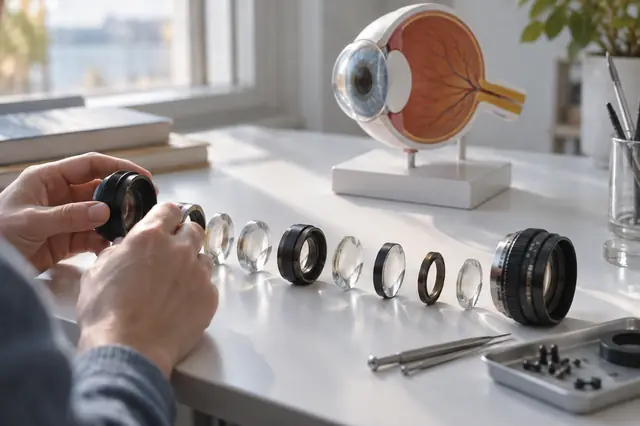
The American Academy of Ophthalmology (AAO) explains it simply. The retina at the back of the eye is covered in light-sensitive cells. Everyone has one spot on the retina where the optic nerve connects, and in that area there are no light-sensitive cells. So that part of the retina can't see. That's the blind spot.
The optic nerve carries signals from millions of nerve fibres in the retina to the brain, according to the AAO. Those fibres have to leave the eye somewhere, and where they bundle together, there's no room for light-sensitive cells.
Find your own
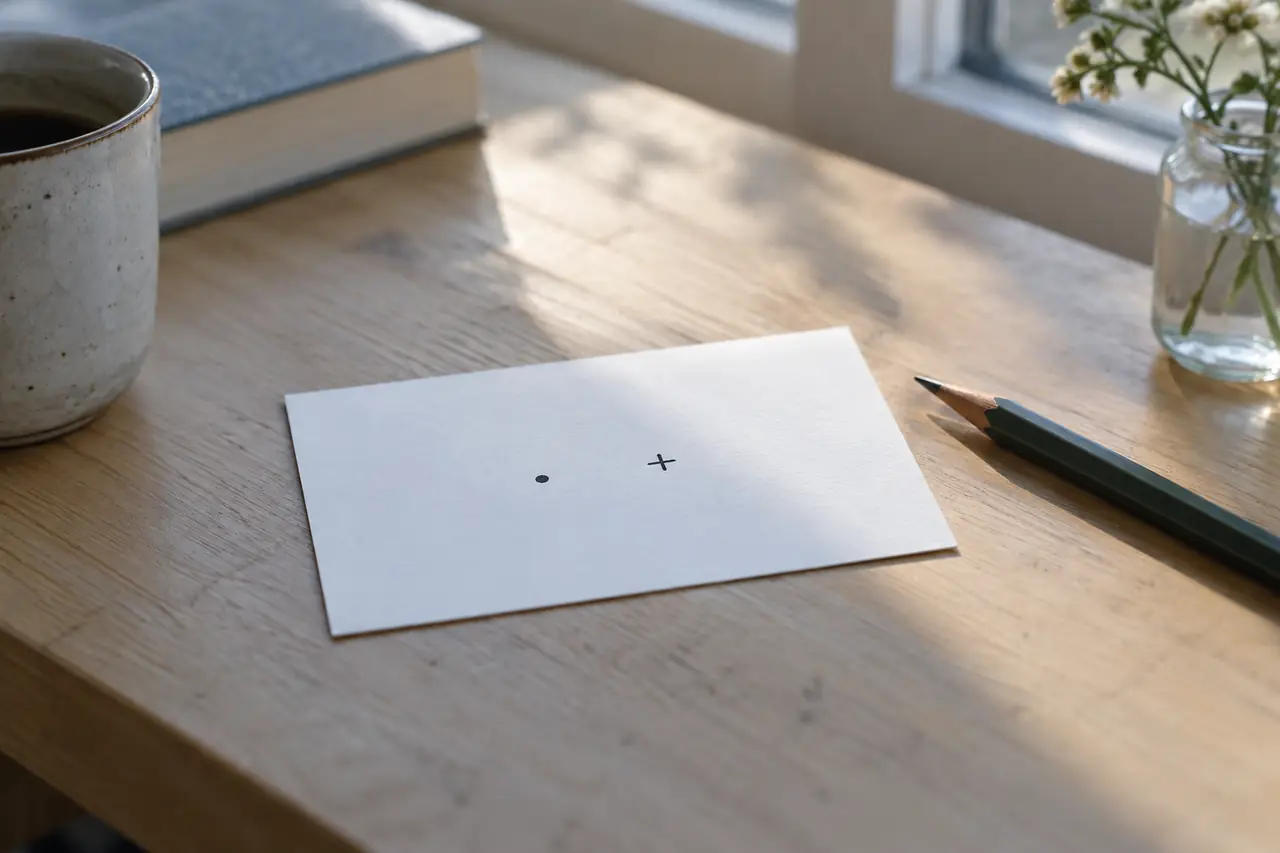
This is the experiment the AAO describes with a card: draw a dot and an X, hold the card at arm's length, close one eye, look at the X and slowly bring the card closer. At some point the dot vanishes, then comes back as you keep moving. Switch eyes and look at the dot instead, and the X disappears.
Why you never notice it
Two things hide the blind spot in everyday life:
- The other eye covers it. The experiment only works with one eye closed. With both eyes open, the other eye sees the area that one eye's blind spot misses.
- The brain fills in the gap. The AAO's experiment shows this neatly: draw a straight line through the dot and the X and repeat the test. When the dot disappears, the line still looks continuous. The brain knows a line is there and fills in the missing piece.
The normal blind spot isn't a symptom
The blind spot you just found is part of every eye. It isn't a sign of a problem.
A new gap in your vision is a different thing. If you notice a dark or missing patch, a shadow, or a curtain over part of what you see, that isn't your natural blind spot. The National Eye Institute (NEI) lists a dark shadow like a curtain, or a blurry area in your side or central vision, as a warning sign of retinal tear or detachment, which can be a medical emergency.
How eye exams check your field of vision
The American Academy of Ophthalmology describes a visual field test, which measures how wide an area you can see while looking at a central point. In the most detailed version, you look into a bowl-shaped instrument and press a button each time a small light appears. The test can show blind spots (scotomas) and where they are, and their size and shape can help a doctor understand what's affecting vision. See what happens during an eye exam.
Related reading
Read more by topic
Common questions
Why does everyone have a blind spot?
The American Academy of Ophthalmology explains that where the optic nerve connects to the retina there are no light-sensitive cells, so that small area can't see.
Why don't I notice my blind spot?
With both eyes open, the other eye sees what one eye's blind spot misses, and the brain fills in the gap, as the AAO's line experiment shows.
How do I find my blind spot?
Draw a dot and an X on a card, hold it at arm's length, close one eye, look at the X and slowly bring the card closer. The dot disappears at some point, then reappears.
Is a new blind spot normal?
No. A new dark or missing patch, a shadow or a curtain over part of your vision isn't your natural blind spot. The National Eye Institute lists these as warning signs that need urgent care.
How do eye doctors test for blind spots?
With a visual field test, which the American Academy of Ophthalmology describes as measuring how wide an area you can see while looking at a central point. It can show blind spots and where they are.
Sources
End of article