





Colour blindness explained: types, causes and testing
Most people with colour blindness still see colour, just differently. What causes it, why it's more common in men, the types and testing.
New articles by email
One email a week.
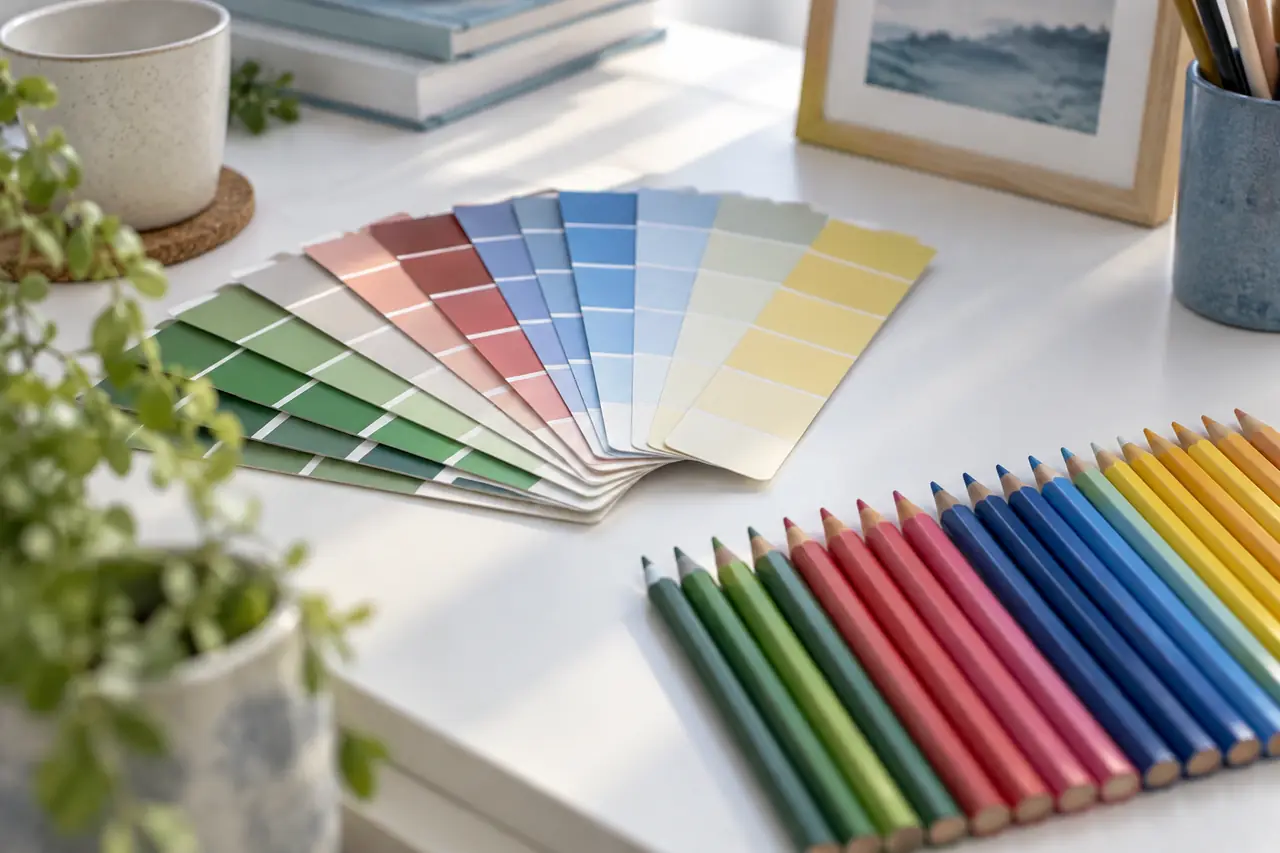
"Colour blind" sounds like seeing the world in black and white. For almost everyone with the condition, it's nothing like that. The National Eye Institute (NEI) describes colour blindness, or colour vision deficiency, as seeing colours differently from most people. Many people have it for years without knowing.
Colour vision is one of the checks described in what happens during an eye exam. For parents, signs a child may have trouble seeing lists other things to watch for, and when a child should have an eye exam gives the usual ages.
How common it is
The NEI says about 1 in 12 men have colour vision deficiency, and that men have a much higher risk than women.
Why men are affected more
The American Academy of Ophthalmology (AAO) explains that the genes behind the most common type are on the X chromosome. Men have one X chromosome and women have two. A man needs only one copy of the changed gene to be colour blind. A woman needs it on both of her X chromosomes. A woman with one copy usually has typical colour vision, but the AAO says there's a 50 percent chance she could pass it to a son.
The main types
- The most common type
- Red and green are hard to tell apart
- Usually inherited
- Less common
- Blue and yellow can look alike
- Rare
- No colour seen at all
The AAO lists "colour-blind people see only in black and white" as a myth: most people with colour blindness see some colour, and seeing no colour at all is rare.
Other causes
Most colour vision deficiency is inherited and present from birth. See how the eye works for where colour is sensed. The NEI notes that it can also come from damage to the retina, optic nerve or brain, and that colour vision can change with age, often because of cataracts. A change in how you see colours later in life is worth mentioning at an eye exam.
How it's tested
The NEI says an eye doctor can usually check for colour vision deficiency with a simple test. The most common version shows circles made of coloured dots with a number or shape hidden inside, which people with colour vision deficiency find hard to see.
Online versions exist, but screens show colours differently, so they're no substitute for a test with an eye care professional. The NEI suggests parents consider testing a child who has a family history of colour blindness or seems to struggle learning colours.
Living with colour vision deficiency
The NEI says most people adapt over time and manage everyday life without major problems. Some practical points it mentions:
- Children may need some help with colour-based tasks at school.
- Some jobs that depend on colour may need adjustments.
- Phone apps can name a colour when you tap part of a photo.
- Special glasses and contact lenses can increase contrast between some colours. They don't restore typical colour vision. An eye care professional can explain what to expect.
Labels, patterns and text alongside colour make a big difference too. That's why good charts, maps and apps never rely on colour alone. On this site, every chart labels its values in text.
When to see someone
See eye myths and facts for more myths the AAO corrects. Book an eye exam if colours look different from how they used to, if the change is in one eye only, or if a child seems to struggle with colours. A sudden change in colour vision alongside other vision changes needs prompt attention.
Read more by topic
Common questions
How common is colour blindness?
The National Eye Institute says about 1 in 12 men have colour vision deficiency. Women are affected much less often.
Why is colour blindness more common in men?
The American Academy of Ophthalmology explains that the genes for the most common type are on the X chromosome. Men have one X, so one changed copy is enough; women need it on both.
Do colour-blind people see in black and white?
Almost never. The American Academy of Ophthalmology lists that as a myth: most people with colour blindness see some colour, and seeing no colour at all is rare.
What is the most common type of colour blindness?
Red-green, where red and green are hard to tell apart. Blue-yellow is less common, and complete colour blindness is rare.
How is colour blindness tested?
The National Eye Institute says an eye doctor can usually check with a simple test, most often circles of coloured dots with a number or shape hidden inside.
Sources
End of article