





Vision changes with age: what's common, what to check
Reading glasses and slower adjustment to the dark are common with age. Changes eye care bodies describe, and how often to get checked.
New articles by email
One email a week.
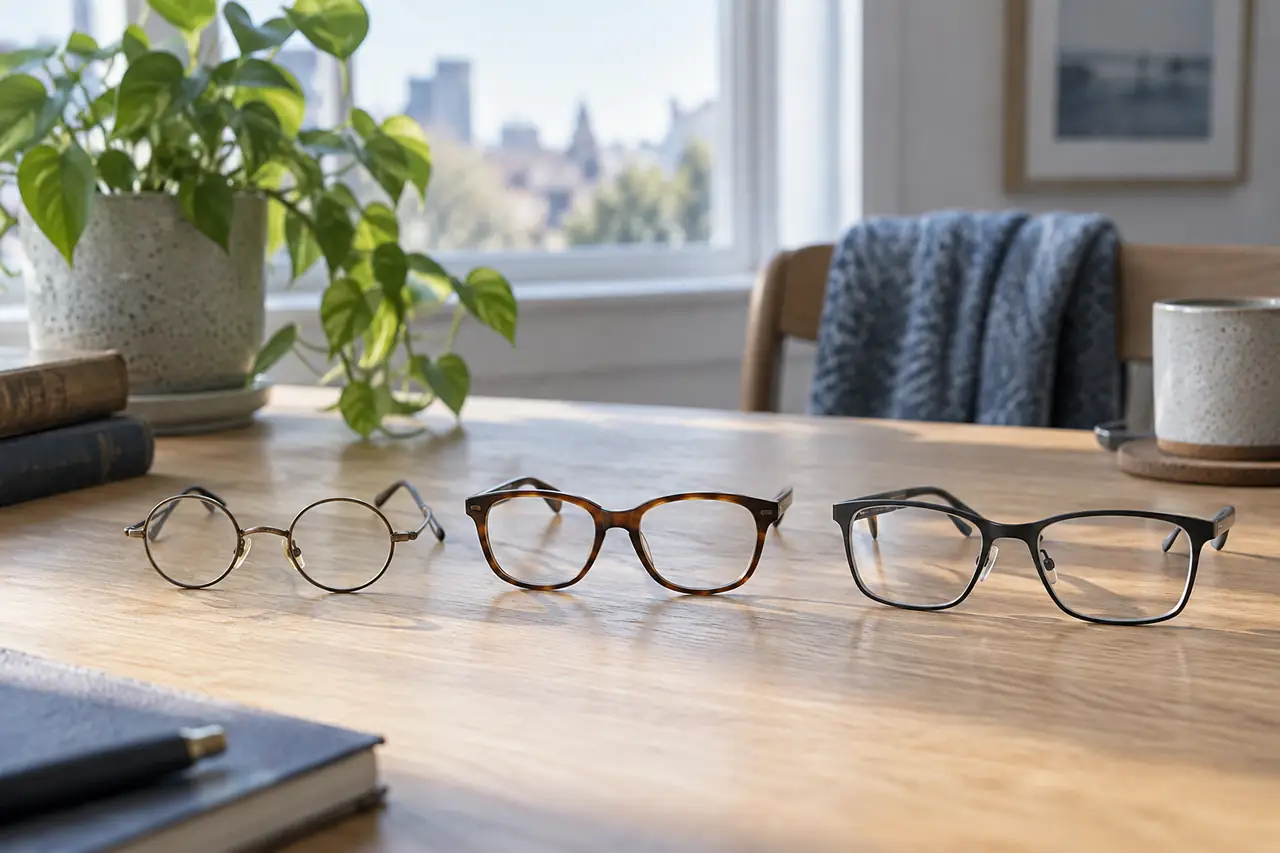
Eyes change as we get older, like the rest of the body. Some changes are expected and easy to work with. Others are signs of conditions that become more common with age and are worth catching early. The American Academy of Ophthalmology (AAO) lists "losing vision is an inevitable part of ageing" as a myth: many age-related problems can be managed, and regular exams help find them.
How often to get your eyes checked and what happens during an eye exam cover the checks themselves. The eye guides A to Z has short entries on cataract and glaucoma.
Common with age, and what to check
- Near focus gets harder after 40 (presbyopia)
- Eyes take longer to adjust to the dark
- Less contrast between similar colours
- More floaters as the vitreous gel changes
- Drier eyes, especially after menopause
- Eyelid inflammation more often
- Cataracts
- Glaucoma, often without early symptoms
- Age-related macular degeneration, usually after 50
- Diabetic eye disease
Near vision
The AAO says presbyopia is common after 40 and makes close work like reading harder. Holding your phone at arm's length is the classic sign. Our post on reading glasses after 40 explains why it happens.
Light, contrast and night vision
The AAO describes eyes taking longer to adjust in the dark and objects becoming harder to pick out against similar backgrounds. The AAO also notes, in its list of eye myths, that good lighting makes reading easier and reduces eye fatigue. See night driving and glare.
Floaters and flashes
The AAO explains that the vitreous gel thins or shrinks with age and forms clumps that cast spots in your vision. These are usually harmless. But it advises seeing an ophthalmologist promptly if you notice a sudden increase in floaters or flashes. See eye floaters.
Dry eyes and eyelids
Tear production drops with age, according to the AAO, and dry eye is especially common after menopause. Eyelid inflammation (blepharitis) can also become more common.
Conditions to catch early
The AAO says glaucoma often causes no early symptoms, which is why routine exams matter. Cataracts cloud the lens, and the AAO notes that surgery is an option for them. Macular degeneration usually affects adults over 50 and affects central vision. People with diabetes have a higher risk of eye disease. See diabetes and your eyes.
Eyes and the rest of the body
The AAO notes that an eye exam can reveal signs of health problems elsewhere in the body, such as high blood pressure and high cholesterol. It also points out that changes in balance and vision raise the risk of falls as we age, and that falls are a common cause of eye injuries, mostly at home. Good lighting on stairs and in hallways, and up-to-date glasses, are simple steps. See eye safety at home.
How often to get checked
- By 40Baseline exam with an ophthalmologist (AAO)
- 18 to 64At least every two years if low risk (AOA)
- 60 and overDilated exam every 1 to 2 years (NEI)
- 65 and overEvery year (AOA)
Keeping a record
Over the years, a simple record helps: dates of eye exams, prescriptions, any diagnoses and your family history. A journal like Ocufuse can keep these notes in one place for appointments. See your family eye health history.
Read more by topic
Common questions
What eye changes are normal with age?
The American Academy of Ophthalmology lists harder near focus after 40, slower adjustment to the dark, less contrast, more floaters, drier eyes and more eyelid inflammation.
At what age does eyesight start to change?
The American Academy of Ophthalmology says presbyopia is common after 40 and recommends a baseline eye exam by 40.
How often should older adults have eye exams?
The American Optometric Association recommends every year from 65. The National Eye Institute recommends a dilated exam every 1 to 2 years for adults over 60.
Is losing vision a normal part of ageing?
The American Academy of Ophthalmology lists that as a myth. Some changes are expected, but many problems can be managed, and regular exams help find conditions like glaucoma early.
Sources
End of article