




Eye safety at home: DIY, cleaning and the garden
Nearly half of eye injuries happen at home. Everyday jobs that put eyes at risk, simple protective habits, and first steps after an injury.
New articles by email
One email a week.
Most people picture eye injuries happening on building sites or sports pitches. The American Academy of Ophthalmology (AAO) reports that nearly half of all eye injuries happen at home, and that home repairs, yard work, cleaning and cooking caused more than 40 percent of eye injuries.
Rubbing your eyes explains why to go gently after dust or grit, and eye makeup and eye hygiene covers everyday products near the eyes. For the sun, see how to watch a solar eclipse safely, and for smoky air, wildfire smoke and your eyes.
Everyday jobs that put eyes at risk
- Drilling, sanding, sawing
- Hammering nails
- Working above your head
- Mowing and strimming
- Trimming hedges and branches
- Spraying fertiliser or weedkiller
- Oven and drain cleaners, bleach
- Spray bottles aimed the wrong way
- Hot fat spitting from a pan
Simple habits
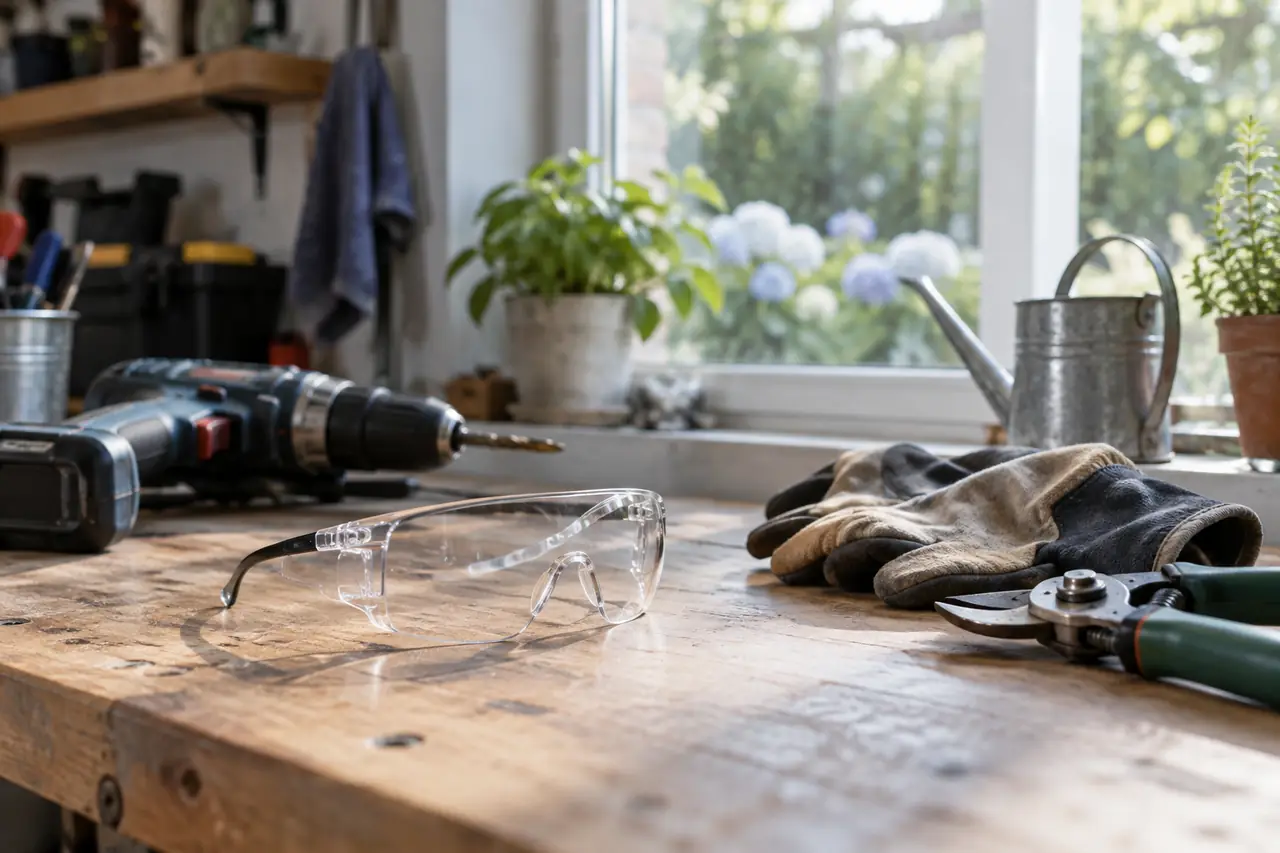
- Wear protective eyewear for risky jobs. The AAO calls this the easiest step and says it could stop 90 percent of eye injuries.
- Keep it where you work. A pair in the shed and one in the toolbox gets worn far more often than one in a drawer.
- Read chemical labels and point spray nozzles away from you before squeezing.
- Keep children back from mowing, strimming and DIY, and store chemicals out of reach.
The AAO found that only 35 percent of people surveyed always wore protective eyewear for home repairs or maintenance. Sun and wind are outdoor hazards too; see sunglasses and UV.
Sport and play
Home isn't the only risk. The AAO says more than 40 percent of eye injuries each year are related to sports or recreation, and that men are more likely than women to injure an eye. Of the people who were wearing eyewear when injured, only about 5 percent had safety or sports glasses on. Eyewear designed for the activity, such as sports goggles, is the AAO's suggestion. Outdoors, it also suggests sunglasses or UV-protective goggles.
If something gets in your eye
- Don't rubRubbing can scratch the eye.
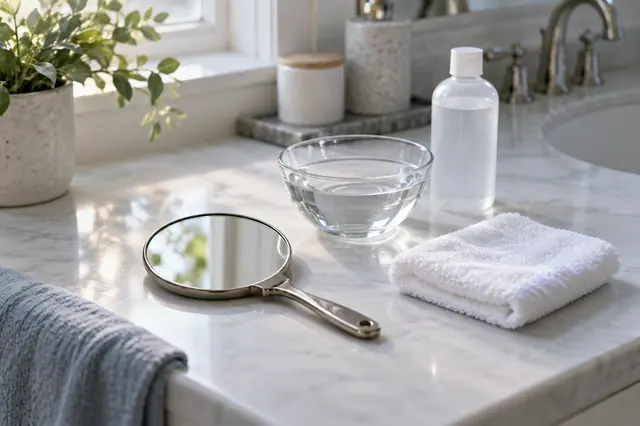
- Rinse with clean waterNot hot. The NHS says to run water over the eye for at least 20 minutes.
- Chemicals: keep rinsingKeep rinsing while you wait for help, and take the product with you.
- Don't remove anything stuckLeave anything embedded in the eye for professionals.
The AAO advises seeing an ophthalmologist or other doctor as soon as possible after any eye injury, even if it seems minor. See feels like something is in your eye for what to do when the feeling lingers.
When it's an emergency
The NHS advises going to A&E or calling 999 if:
- A sharp object has pierced the eye, or something hit it at high speed
- A strong chemical such as oven cleaner or bleach got in the eye
- Your sight changes after the injury
- You have severe pain, or you can't open or move the eye
- There's blood or pus coming from the eye
The NHS also says not to drive yourself to A&E. If an eye stays red or sore after a minor injury, see our page on red eye.
Read more by topic
Common questions
Where do most eye injuries happen?
The American Academy of Ophthalmology reports that nearly half of all eye injuries happen at home.
Which household jobs cause eye injuries?
The American Academy of Ophthalmology says home repairs, yard work, cleaning and cooking caused more than 40 percent of eye injuries.
What should I do if a chemical gets in my eye?
Rinse with clean water straight away and keep rinsing for at least 20 minutes, as the NHS advises. For strong chemicals, keep rinsing while you wait for help, take the product with you, and go to A&E or call 999.
Should I see a doctor after a minor eye injury?
The American Academy of Ophthalmology advises seeing an ophthalmologist or other doctor as soon as possible after any eye injury, even if it seems minor.
Do people wear eye protection for DIY?
Not often. The American Academy of Ophthalmology found only 35 percent of people surveyed always wore protective eyewear for home repairs or maintenance.
Sources
End of article