



Does using your phone in the dark damage your eyes?
Scrolling in bed with the lights off won't damage your eyes, but it can tire them. What eye doctors say, and habits for screens at night.
New articles by email
One email a week.
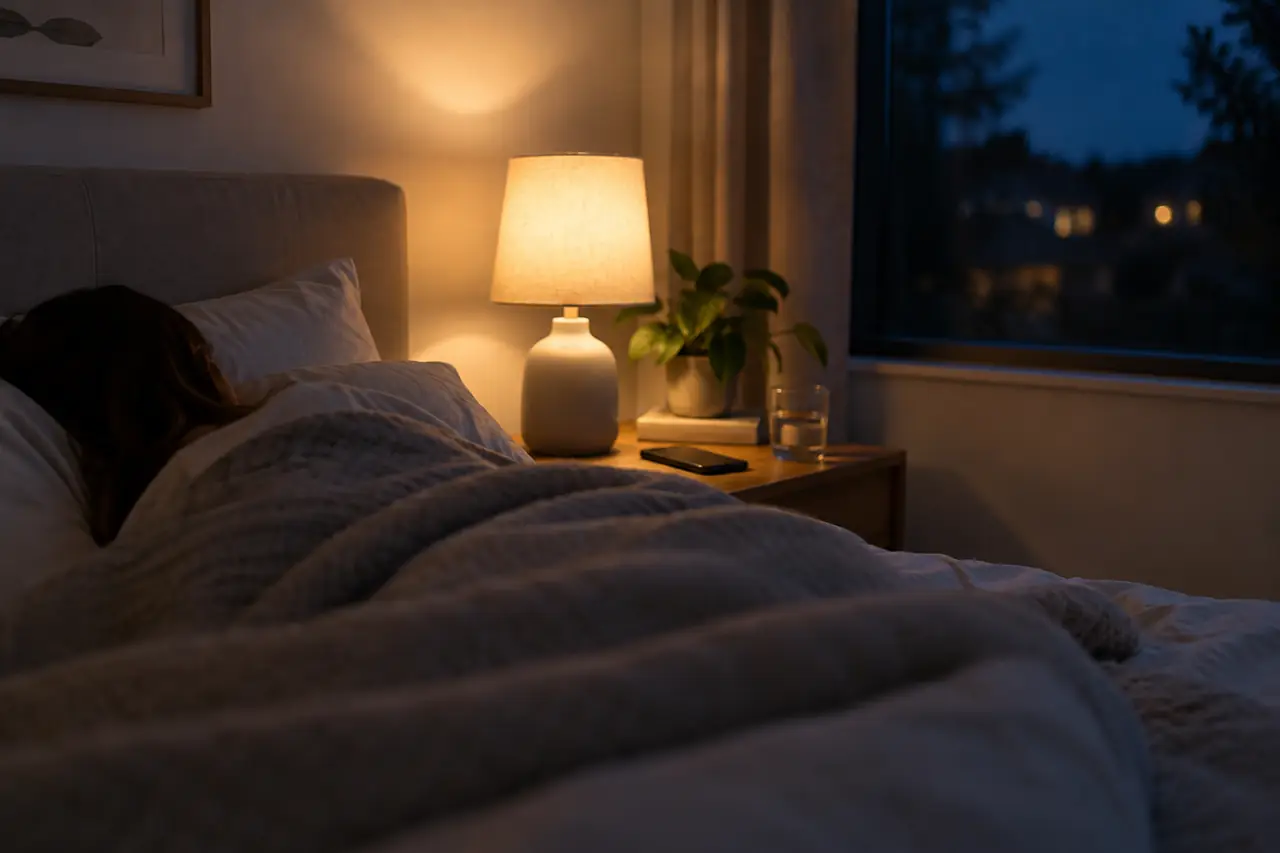
The short answer, from the American Academy of Ophthalmology (AAO): using your phone in the dark won't damage your eyes, but it may tire them. A soft light in the room, lower brightness, both eyes open and short breaks make it more comfortable.
Lights off, phone on: for many people, it's the last thing they do each day. A common worry is that looking at a bright screen, or reading a book, in a dark room harms the eyes.
Is it bad to use your phone in the dark?
The AAO says it doesn't harm your eyes. Using a screen in the dark won't damage your eyes, but it may cause eye fatigue. Reading in dim light is in the AAO's list of common eye myths for the same reason: it can tire the eyes, but it doesn't cause lasting harm.
Reading or using your phone in the dark will ruin your eyesight.
It won't damage your eyes, but it may tire them. If your eyes start to feel strained, change the lighting or take a break.
Phone vs computer eye strain compares the two screens. Whether dark mode is better and screen glare and brightness cover screen settings, and what research says about blue light glasses covers the sleep question. If you read books on a screen at night, see whether an e-reader is easier on the eyes than a phone.
Phones in the dark at a glance
The common worries, what the American Academy of Ophthalmology says about each, and what helps.
| The worry | What the AAO says | What helps |
|---|---|---|
| Using a phone in a dark room damages the eyes | It won't damage your eyes, but it may cause eye fatigue | A soft light in the room, lower brightness, breaks |
| Reading in dim light ruins eyesight | A common myth: it can tire the eyes but causes no lasting harm | A reading lamp aimed at the page |
| A screen much brighter than the room | Can cause digital eye strain; night mode reduces the contrast | Night mode or a lower brightness |
| One eye can't see for a few minutes after scrolling in bed | Transient smartphone blindness: the screen eye takes minutes to readjust to the dark | Look at the phone with both eyes |
| Dry or tired eyes after a long scroll | Screens can reduce blinking; the 20-20-20 rule and artificial tears can help | Every 20 minutes, look 20 feet away for 20 seconds |
| Trouble falling asleep after screens | Bright light late at night can stop melatonin, the hormone that helps you sleep | Limit screens in the 1 to 2 hours before bed |
Why does using your phone in the dark feel tiring?
In a dark room, a phone screen is often the brightest thing you can see. Your eyes are adjusting to a dark room and a bright rectangle at the same time. The AAO notes that a screen too bright for a dark room may cause digital eye strain, and that night mode reduces the stark contrast between screen and room.
Other things add up in bed, too. Phones are often held close to the face at awkward angles, and it's easy to keep scrolling long past the point you'd take a break at a desk. And like any screen, a phone can reduce how often you blink. See how often you blink.
Why can't I see out of one eye after using my phone in the dark?
Some people put their phone down in the dark and find one eye can't see properly for a few minutes. The AAO has described two cases, reported in the New England Journal of Medicine, of women who temporarily lost vision in one eye for up to 20 minutes after reading their phones in bed with the other eye covered by a pillow.
The explanation was simple: the eye looking at the phone had adjusted to the bright screen, while the covered eye had adjusted to the dark. When the phone went down, the screen eye took several minutes to readjust. The researchers called it transient smartphone blindness. The advice that came with it was equally simple: look at your phone with both eyes.
Any vision loss that doesn't clear quickly, or that happens without this kind of explanation, needs urgent attention. See the section at the end.
Habits for screens in the evening
- Leave a soft lamp on so the screen isn't the only light
- Turn the brightness down, or use night mode
- Look with both eyes, not one eye peeking out from the pillow
- Hold the phone a little further away than feels natural
- Look up and away now and then, and blink fully
- Set a time to put it down
The AAO also suggests the 20-20-20 rule (every 20 minutes, look at something 20 feet away for 20 seconds), and artificial tears if your eyes feel dry. During the day, a free 20-20-20 screen break timer can do the counting for you, and the text size calculator shows whether the text on your screen is comfortably large for the distance you hold it.
Is reading in dim light bad for your eyes?
The same applies to paper. Reading in poor light may make your eyes work harder and feel tired sooner, but it won't harm them. A small reading lamp aimed at the page, rather than at your face, usually makes reading in bed more comfortable.
Phones and sleep
The bigger effect of night-time screen use may be on sleep rather than the eyes. The AAO says bright light late at night can make the brain behave as if it's daytime and stop producing melatonin, the hormone that helps you sleep. It suggests limiting screen time in the one to two hours before bed and using night mode. Our post on sleep, screens and tired eyes looks at this in more detail.
Noticing a pattern
If your eyes often feel sore or dry in the mornings, it can help to note your evening screen time for a week or two alongside how your eyes feel when you wake up. You might use a notebook or a free eye symptom journal like Ocufuse. Patterns are easier to see written down, and easier to explain at an appointment, especially with a checklist of questions for your eye appointment.
When to see someone
Book an appointment with an optometrist or eye doctor if:
- Your eyes are often red, watery or blurry after screen use
- You've become more sensitive to light
- Eye strain or headaches carry on despite these changes
Read more by topic
Common questions
Is using your phone in the dark bad for your eyes?
The American Academy of Ophthalmology says using a screen in the dark won't damage your eyes, but it may cause eye fatigue. Keeping a soft light on and turning the brightness down usually feels more comfortable.
Does reading in dim light ruin your eyesight?
No. It's on the American Academy of Ophthalmology's list of common myths. Dim light can make your eyes tire sooner, but it doesn't cause lasting harm. Good lighting makes reading easier.
Why can't I see out of one eye after using my phone in bed?
If one eye was covered by a pillow, it adjusted to the dark while the other adjusted to the bright screen. The screen eye can take several minutes to readjust. Use your phone with both eyes. Vision loss that doesn't come back quickly needs urgent care.
Does night mode help?
The American Academy of Ophthalmology says night mode cuts the contrast between screen and room, and suggests limiting screens in the one to two hours before bed.
Sources
- American Academy of Ophthalmology: Is working on a computer in a dark room bad for my eyes?
- American Academy of Ophthalmology: Common eye and vision myths
- American Academy of Ophthalmology: Can reading a smartphone with one eye lead to temporary blindness?
- American Academy of Ophthalmology: Should you use night mode to reduce blue light?
End of article