





Is VR bad for your eyes?
Eye doctors see no sign VR headsets harm the eyes, but long sessions can leave them tired and dry. Why that happens and what makes VR more comfortable.
New articles by email
One email a week.
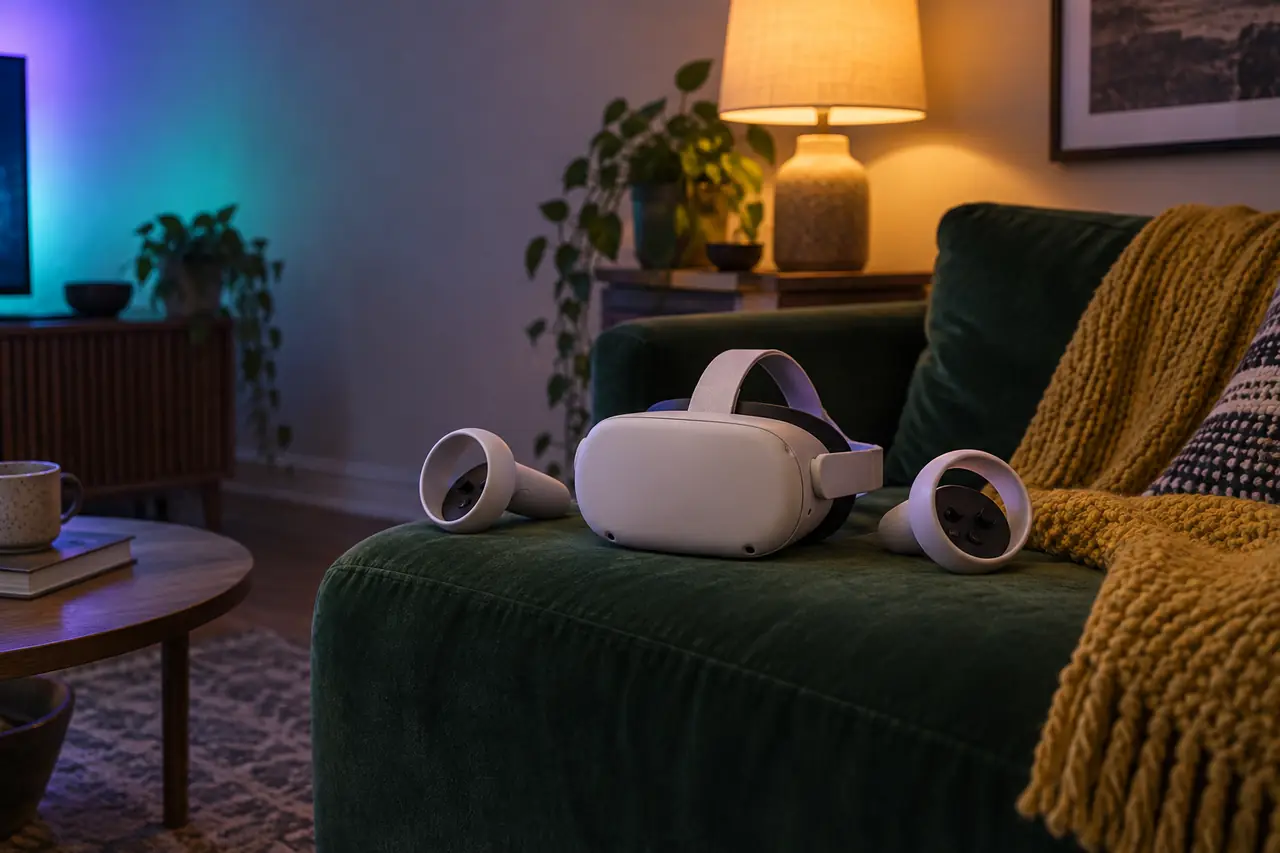
As far as eye doctors know, VR doesn't damage your eyes, but long sessions can leave them tired, dry and a bit achy. The American Academy of Ophthalmology (AAO) says ophthalmologists see no reason to be concerned that headsets harm eye health or development, while pointing out that the technology is fairly new and no long-term studies have been done.
A common question in VR forums goes like this: I got a headset a few weeks ago, I play for two or three hours in the evening, and afterwards my eyes feel heavy and things look slightly off for a while, so am I wrecking my eyesight? The replies tend to swing between "it's fine, everyone gets that" and "VR will ruin your eyes." What eye doctors say sits much closer to the first, with a few habits that make a real difference to comfort.
For flat-screen gaming, see gaming and your eyes. If you're deciding about a child and a headset, screen time and children's eyes covers the wider picture.
What the eye doctors say
The AAO's article on VR quotes an ophthalmologist who reviews its eye health content: as far as anyone knows, the technology poses no threat to the eyes. The same article says people with conditions such as amblyopia (lazy eye) or strabismus (eyes that don't line up) may not see the 3D effect properly and may be more likely to get headaches or tired eyes in a headset. It's careful to add that this doesn't mean VR causes those conditions. It just shows up something that was already there.
The honest summary is that the evidence points toward discomfort, not damage, and that long-term research is still missing. That's the same picture as for ordinary screens, which the AAO says won't cause permanent eye damage either.
Why your eyes feel tired after a session
Three things tend to add up in a headset.
- You blink less. The AAO says people normally blink about 15 times a minute but only 5 to 7 times a minute while looking at a screen. In a headset you're often concentrating hard, and the surface of the eye dries out and starts to feel gritty or tired.
- Your eyes keep working to focus. VR shows a slightly different image to each eye, which is how you get depth. The AAO explains that because the screen itself never moves closer when an object in the game does, your eyes have to keep focusing back out to see clearly, and that back-and-forth effort strains them. It also notes that people who find VR very hard to watch may have some trouble getting their eyes to work together in everyday life too.
- Your balance gets mixed signals. Seeing movement while your body stays still gives the brain the same visual signals as real motion, which the AAO says can lead to dizziness. If you get motion sick on boats or roller coasters, you'll likely feel it in VR as well.
The slightly odd feeling some people describe for a few minutes after taking a headset off fits with this. Your eyes and brain are switching back from a screen a few centimetres away to a real room.
Habits that make VR more comfortable
- Set up the fit before you play. If the picture is blurry, the headset is often sitting too high or too low on your face. Most headsets also have a setting for the distance between the lenses. Matching it to your eyes, following the maker's instructions, gives each eye a clearer view.
- Keep your glasses on. The AAO says to wear your glasses inside the headset. If your frames don't fit, check whether your model has a glasses spacer or prescription lens inserts.
- Take real breaks. The AAO doesn't give a set VR schedule, but its general screen advice is to look up and away at something in the distance now and then. In VR that means taking the headset off, not just pausing the game. Many people find stopping every half hour or so easier than pushing through a three-hour session.
- Blink on purpose. The AAO suggests making a conscious effort to blink more at screens, and using artificial tears when your eyes feel dry.
- Stop when it feels wrong. Dizziness, a headache or queasiness is a cue to take the headset off and rest, not to finish the level.
Kids, shared headsets and hygiene
The AAO notes that most headset makers say their devices aren't suitable for children under 12 or 13. The ophthalmologist it quotes doesn't expect VR to harm a child's eye development and suggests age limits may make the most sense for the content. If a younger child does use one, short sessions and an adult nearby keep things manageable.
Shared headsets are a different matter. The AAO says germs that cause pink eye can survive on a headset, though catching an infection that way is no more likely than from a doorknob or a phone. Its advice is simple: wash your hands before and after using the gear, and wipe down the headset between users. For the lenses, use the cleaning method the maker recommends, since they scratch easily. Anyone with a red, sticky eye should sit this one out.
When to see an eye care professional
Tired eyes that settle within an hour after a session are common. Book an eye exam if you can't get a clear picture in the headset even with a good fit, if you see double, or if headaches or eye strain keep coming back with VR or other screens, since an exam can check how your eyes focus and work together. Any sudden change in vision, eye pain or a red, painful eye is a reason to get help promptly, whatever you were doing at the time.
Read more by topic
Common questions
Can a VR headset damage your eyes?
The American Academy of Ophthalmology says ophthalmologists see no reason to think VR headsets damage the eyes or their development, while noting that the technology is fairly new and no long-term studies have been done.
Why do my eyes feel tired after VR?
People tend to blink less at any screen, so the eye surface dries out, and the AAO says the eyes keep working to focus on a screen that never moves closer. Both can leave the eyes feeling tired or sore after a long session.
Should I wear my glasses in a VR headset?
Yes. The AAO says to keep your glasses on while using a VR headset. Many headsets have a spacer or room for frames, and some offer prescription lens inserts.
How old should children be to use VR?
The AAO notes that most headset makers say their devices aren't suitable for children under 12 or 13. It adds that eye doctors don't expect VR to harm eye development, and that age limits may make most sense for the content.
Sources
End of article