




Is it OK to use eye drops every day for screen dryness?
Preservative-free lubricating drops are generally fine as often as needed, says the AAO. Drops with preservatives and redness relievers are different.
New articles by email
One email a week.
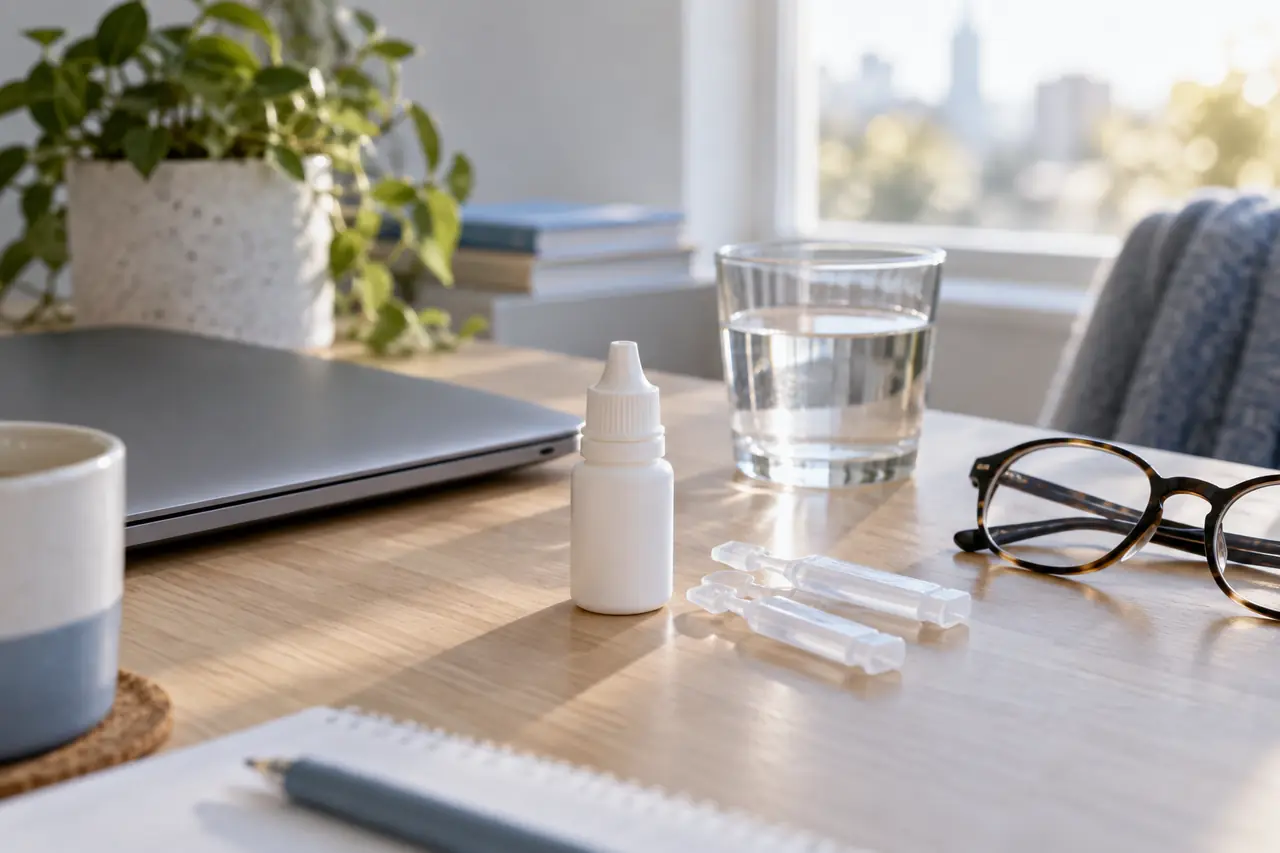
For plain lubricating drops, usually yes. The American Academy of Ophthalmology (AAO) says lubricating eye drops without preservatives are generally safe to use as often as you need them, so the label on the bottle matters more than the number of days in a row.
A common question on Reddit goes like this: I work at a computer all day, my eyes feel dry by early afternoon, and I've started using drops every day. Is that a bad habit, and am I making my eyes depend on them? The honest answer depends on which drops are in your bag, how often you use them and whether the dryness is changing.
For the steps of putting drops in, see how to put in eye drops. For desk and room changes, see dry eyes at work.
Why screens and dry eyes go together
Most of it is blinking. The AAO says people normally blink about 15 times a minute, but studies show we blink only about 5 to 7 times a minute while using computers and other screens. Each blink spreads a fresh layer of tears over the eye, so fewer blinks means longer stretches for the surface to dry. The AAO also lists reading and other activities that reduce blinking among the everyday causes of dry eyes.
That's why a lot of people only notice dryness on work days, or late in the day, and feel fine at the weekend. Among its tips for screen users, the AAO suggests using artificial tears to refresh your eyes when they feel dry, alongside blinking on purpose and looking away from the screen.
Not all eye drops are the same thing
The shelf at a pharmacy mixes several kinds of product that look alike. For screen dryness, three groups are worth telling apart.
- Lubricating drops with preservatives. These come in a multi-use bottle. The preservative stops bacteria growing once it's open. The AAO notes that many people find preservatives irritating, particularly when dryness is more severe.
- Preservative-free lubricating drops. These usually come in small single-use vials, though some multi-use bottles are designed to work without preservatives. The AAO says they're often best for people who use artificial tears more than four times a day.
- Redness relieving drops. These are sold to "take the red out". The AAO explains that they're actually decongestants. They can make eyes look less red, but they can also make dry eye symptoms worse over time. They're a different product from artificial tears.
Gels and ointments are thicker again. The AAO says they can blur your vision for a while, which is why most people use them just before bed rather than at a desk.
How often is too often?
For preservative-free lubricating drops, the AAO doesn't give a daily limit. It says they're generally safe to use as often as you need them.
For drops with preservatives, it's different. The AAO says many eye doctors recommend not using them more than four times a day. Another AAO page puts the switch at six times a day, or at any point if you're allergic to preservatives. The sources differ slightly on the number, but the direction is the same: if you're using drops many times a day, preservative-free ones are the usual choice.
A simple way to check yourself is to count for a few ordinary work days. If you're at two drops a day, the type matters less. If you've lost count by lunch, it's worth a look at what's in the bottle, and at what's making your eyes dry in the first place.
Things that cut down how often you reach for the bottle
Drops add moisture, but they don't change why your eyes are drying out. These are the habits eye care groups suggest for long screen days.
- Blink on purpose. The AAO suggests making a conscious effort to blink more often. A few slow, full blinks every so often is easy to pair with checking your messages.
- Look away regularly. The AAO suggests looking at something in the distance for a while. Many people use the 20-20-20 rule: every 20 minutes, look about 20 feet (6 metres) away for 20 seconds. The free screen break timer on this site runs in a browser tab and needs no account.
- Keep the screen at arm's length. The AAO suggests about 25 inches, around 63 cm, from your eyes.
- Watch the air. Point heating vents and fans away from your face. The AAO mentions a humidifier for warm, dry rooms.
If you do use drops at your desk, check the packet for how long a bottle or vial can be used once it's open, since that varies between products.
When daily drops are a reason to book a visit
Using lubricating drops on screen days isn't a problem in itself. But needing them more and more is worth mentioning to someone who can examine your eyes. The AAO suggests talking with an eye doctor if your eyes are still uncomfortable after you've tried different brands of lubricating drops. It also lists dry eye symptoms that are persistent, getting worse, affecting daily activities or not eased by over-the-counter drops as reasons to be seen.
A short note of how many times a day you use drops, which ones and on what kind of day makes that conversation easier. Bring the bottle or the packet with you.
See an eye doctor promptly for significant redness, pain or changes in your vision. And if you notice swelling, trouble breathing or dizziness after using a drop, the AAO says to stop using it and get medical help right away.
Read more by topic
Common questions
Can I use artificial tears every day?
The American Academy of Ophthalmology says lubricating drops without preservatives are generally safe to use as often as you need them. Many people use them daily on long screen days.
How many times a day can I use drops with preservatives?
Many eye doctors suggest no more than four times a day, according to the AAO. Another AAO page gives six as the point to switch. If you're reaching for drops often, preservative-free ones are the usual suggestion.
Are redness relieving drops the same as artificial tears?
No. The AAO explains that drops sold to take the red out are decongestants. They can make eyes look whiter, but they can also make dryness worse over time, so they aren't meant for everyday screen dryness.
When should I see someone about needing drops all the time?
If your eyes still feel uncomfortable after trying different lubricating drops, or the dryness keeps getting worse or gets in the way of your day, book a visit with an eye care professional.
Sources
End of article