





Eye makeup and eye hygiene: everyday habits
Habits from the American Academy of Ophthalmology and the FDA for applying, storing and removing eye makeup safely.
New articles by email
One email a week.
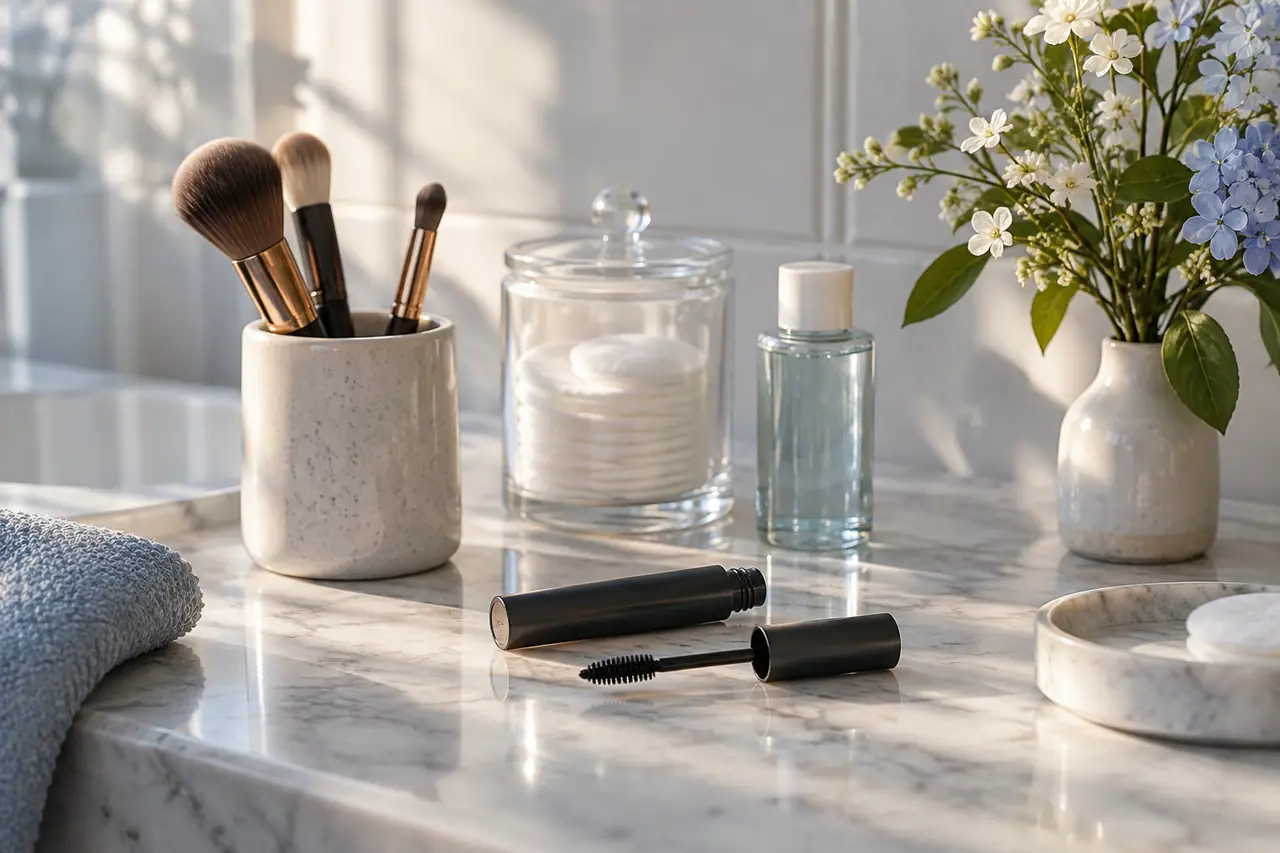
Eye makeup is used close to one of the most sensitive parts of the body, often every day. A few habits keep it from causing irritation. The American Academy of Ophthalmology (AAO) and the US Food and Drug Administration (FDA) both publish practical advice.
If makeup irritates your eyes, why it can feel like something is in your eye and why eye doctors say not to rub are worth a read.
The core habits
- Replace eye makeup after about three months (AAO)
- Never share eye makeup, even with family (AAO, FDA)
- Apply it outside the lash line, away from the eye (AAO)
- Take it all off before sleep, especially mascara (AAO)
- Never apply or remove it in a moving vehicle (FDA)
- Don't add saliva or water to dried mascara (FDA)
- Stop using any product that irritates your eyes (FDA)
Why replacing mascara matters
The FDA notes that manufacturers usually recommend throwing mascara away two to four months after buying it. The AAO's advice is three months. A wand goes from the lashes back into the tube every day. Writing the opening date on the tube with a marker makes it easy to remember.
Sharing and testers
The FDA warns that another person's bacteria may be hazardous to you. That includes friends and family, and shop testers that many people have used. If you try a shade in a shop, use a fresh disposable applicator.
Applying and removing
- Outside the lash line. The AAO advises applying makeup outside the lash line, away from the eye, rather than along the inner rim.
- Not on the move. The FDA says a sudden stop or bump in a car or bus could injure the eye.
- Off before bed. The AAO advises removing all eye makeup at night. Overnight, the eyes don't blink and debris collects at the lash line anyway. See crusty eyes in the morning.
Glitter, kohl and extensions
- Glitter and metallic products. The AAO advises care with glitter, sparkle powder and face paint, which it says are a common cause of irritation of the eye's surface, especially for contact lens wearers.
- Kohl. The FDA advises keeping kohl away from children, as reports have linked it to lead poisoning, and avoiding colour additives that aren't approved for use around the eye.
- Lash extensions. The AAO says extensions can be done safely if applied by a professional.
If you wear contact lenses
The AAO advises washing your hands before handling lenses, and avoiding soaps with added oils or fragrances, which can stick to the lens. Hand cream, makeup remover and oily products on your fingers can end up on a lens the same way. Many lens wearers find it easiest to put lenses in with clean, dry hands before any makeup goes on, and to take them out before removing makeup at night. Glitter is the product the AAO singles out for lens wearers.
When to stop
The FDA advises not using eye makeup if you have an eye infection or the skin around the eye is inflamed, and stopping any product that causes irritation. If irritation continues after stopping, see a professional.
If you wear contact lenses, follow the hygiene advice in contact lens habits, and wash your hands before touching your lenses or your eyes. See also how to put in contact lenses.
When to see someone
- Irritation that continues after you stop a product
- Itchy, red or crusty lid edges that keep coming back
- A lump on the eyelid that doesn't settle
- A red, painful eye, especially with contact lenses
- Changes to your vision
- Something stuck in the eye that won't rinse out
Read more by topic
Common questions
How often should you replace mascara?
The American Academy of Ophthalmology says about every three months. The FDA notes manufacturers usually recommend two to four months after purchase.
Is it safe to share eye makeup?
No. The FDA warns that another person's bacteria may be hazardous to you, and the American Academy of Ophthalmology advises never sharing eye makeup, even with family.
Should I remove eye makeup before bed?
Yes. The American Academy of Ophthalmology advises removing all eye makeup at night, especially mascara.
Can I wear eye makeup with an eye infection?
The FDA advises against using eye makeup if you have an eye infection or the skin around the eye is inflamed.
Is glitter eye makeup safe?
The American Academy of Ophthalmology advises care with glitter, metallic powder and face paint, which it says commonly irritate the eye's surface, especially in contact lens wearers.
Sources
End of article