


How to watch a solar eclipse safely
Looking at the sun, even partly covered, can permanently damage the eyes. How to watch an eclipse with certified viewers or a pinhole.
New articles by email
One email a week.
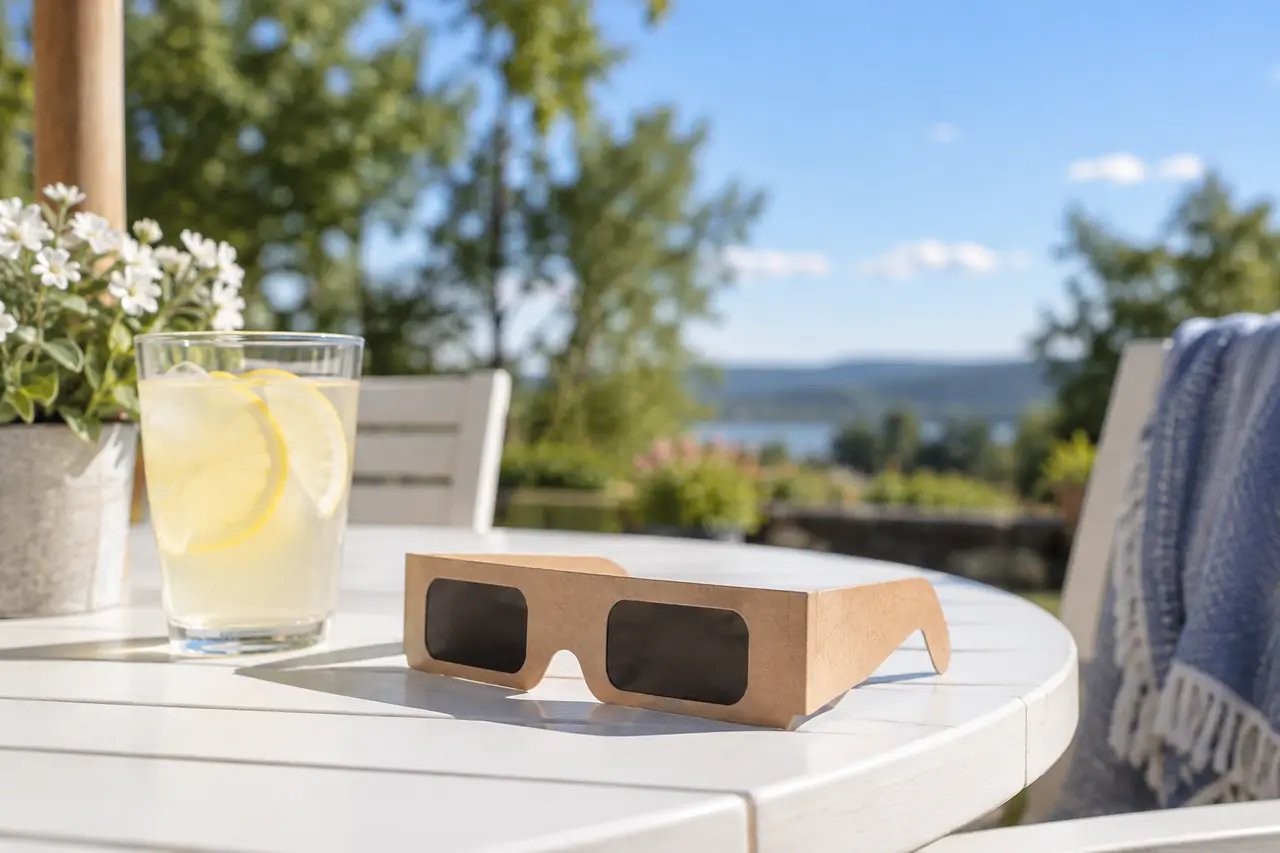
A solar eclipse is worth seeing. But the American Academy of Ophthalmology (AAO) warns that looking at the sun without proper eye protection, even briefly, can permanently damage the retina, a condition called solar retinopathy that can cause blindness. The partly covered sun during an eclipse is just as dangerous to look at as the full sun.
Eye safety at home covers other everyday risks, and eye myths and facts covers what eye doctors say about looking at the sun.
Safe and not safe
- Eclipse glasses or handheld solar viewers that meet ISO 12312-2
- Undamaged viewers, checked before use
- Pinhole projection, with your back to the sun
- A camera, binoculars or telescope with a proper solar filter on the front
- Ordinary sunglasses, however dark
- Homemade filters
- Scratched or damaged eclipse glasses
- Looking through a camera, binoculars or telescope while wearing eclipse glasses
Eclipse glasses
NASA says safe solar viewers should comply with the ISO 12312-2 international standard, and the AAO says the same. NASA is clear that eclipse glasses are not regular sunglasses, and that regular sunglasses, no matter how dark, are not safe for looking at the sun.
- Inspect them first. NASA and the AAO both say to check glasses or viewers before use and throw away any that are scratched or damaged.
- Supervise children. The AAO advises helping children use viewers and glasses correctly. NASA says to always supervise children using solar viewers.
Cameras, binoculars and telescopes
NASA warns that looking at the sun through a camera, binoculars or a telescope without a special solar filter secured over the front can cause severe eye injury. It also says never to look through these while wearing eclipse glasses: the concentrated sunlight can burn through the glasses' filter. The AAO gives the same warning.
Pinhole projection
- Make a pinholePoke a small hole in a piece of card.
- Turn your back to the sunHold the card up so sunlight passes through the hole.
- Look at the imageWatch the small image of the sun on a second card or the ground.
Totality
NASA explains that only during the brief total phase of a total solar eclipse, when the moon completely covers the sun, is it safe to look without protection. You'll know it has arrived when you can no longer see any part of the sun through eclipse glasses. Put your glasses back on before the sun starts to reappear. In a partial or annular eclipse, there is no safe moment to look without protection.
Watching with children
Children are often the most excited eclipse watchers and the least likely to keep glasses on. The AAO advises helping them use viewers correctly, and NASA says to always supervise children using solar viewers. A pinhole projector is a good activity for younger children, because they watch the image on the ground or a card with their back to the sun. Check every pair of glasses for scratches or damage before the day, so you're not doing it in a rush.
Not just eclipses
The AAO lists sun gazing as a myth: looking at the sun can permanently damage the retina at any time, not only during an eclipse. It's worth teaching children never to stare at the sun. For everyday sun protection, see sunglasses and UV.
If you think your eyes were exposed
If you looked at the sun without proper protection and notice anything different about your vision afterwards, see an eye doctor promptly and tell them what happened. Our guide to describing vision changes can help you explain what you see.
Read more by topic
Common questions
Can I look at a solar eclipse with sunglasses?
No. NASA says regular sunglasses, no matter how dark, are not safe for looking at the sun. Use eclipse glasses or viewers that meet ISO 12312-2.
Is it ever safe to look at an eclipse without glasses?
NASA says only during the brief total phase of a total solar eclipse, when the sun is completely covered. Put glasses back on before it reappears.
How do I know if eclipse glasses are safe?
They should meet the ISO 12312-2 standard. NASA and the American Academy of Ophthalmology say to inspect them before use and throw away any that are scratched or damaged.
Can I use binoculars with eclipse glasses?
No. NASA warns the concentrated light through binoculars, a camera or a telescope can burn through the glasses' filter. Those devices need their own solar filter on the front.
What happens if you look at the sun?
The American Academy of Ophthalmology says it can permanently damage the retina, a condition called solar retinopathy that can cause blindness.
Sources
End of article