





Swimming and your eyes: chlorine, goggles and contacts
Red, stinging eyes after the pool are common. What chlorine does to the eye's surface, simple swim habits, and why contacts and water don't mix.
New articles by email
One email a week.
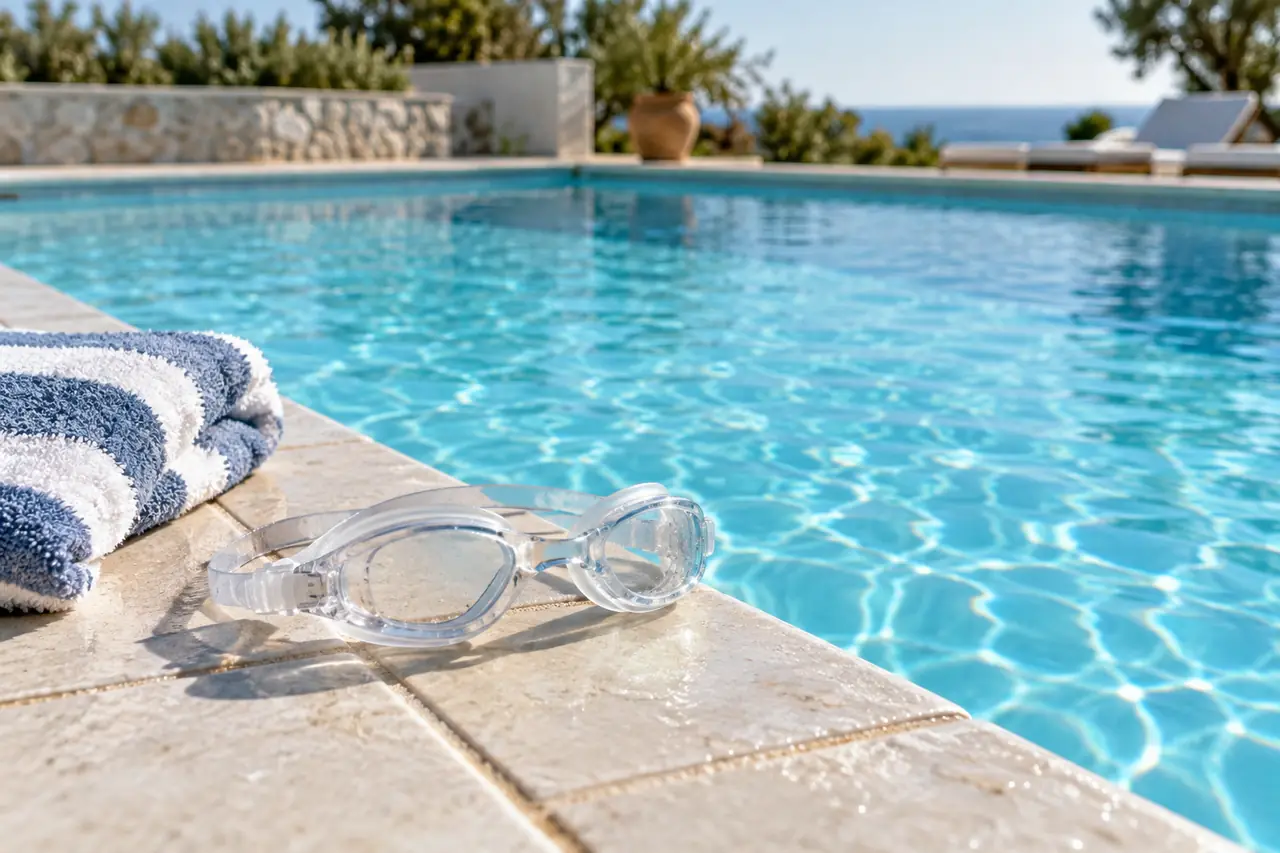
Red, stinging eyes after a swim are so common that many people assume they're just part of it. The American Academy of Ophthalmology (AAO) explains why: chlorine and other pool chemicals can wash away the moist tear film that protects the front of the eye, leaving the surface and edges of the eyes red, itchy, watery and uncomfortable.
A few simple habits make a difference, and one rule matters more than the rest: don't swim in contact lenses.
How to put in contact lenses covers lens basics, and when a red eye needs a doctor helps if redness lasts after a swim.
What pool water does to your eyes
- Strips the tear film. The AAO says frequent swimmers may develop dry eye, which can feel gritty or make vision blurry.
- Irritates the surface. Redness and itching after swimming are usually irritation from chemicals.
- Can carry germs. The AAO notes that some bacteria survive chlorine and can cause conjunctivitis (pink eye).
A simple pool routine
- Goggles onThe AAO suggests goggles every time, to keep pool chemicals out of your eyes.
- Lenses outSwim without contacts. Prescription goggles are an option.
- Rinse afterSplash closed eyes with fresh water to clear chemicals from lids and lashes.
- LubricateThe AAO mentions lubricating drops before and after swimming.
The AAO also suggests drinking plenty of water. If you already have dry eyes, it mentions thicker gel drops before putting on goggles, and talking to your eye doctor about other options.
Contact lenses and water
This is the most important part. The AAO says wearing contact lenses in any water, including pools, hot tubs, the sea and lakes, puts you at high risk of a corneal infection, and that bacteria can grow on lenses after just one swim. Some of these infections can cause pain, damage to the cornea and vision loss.
The CDC also advises removing lenses before swimming or showering. If you really can't avoid wearing them, the American Optometric Association (AOA) says to wear tight-fitting goggles over them, and afterwards to remove the lenses with clean, dry hands and either clean and disinfect them or throw them away. The AOA says never to sleep in a lens that has been in water without cleaning and disinfecting it first.
Our post on contact lens habits covers the rest of the basics.
Open water
The AAO's advice covers the sea, rivers and lakes as well as pools: no lenses, and goggles if you can. For sun on the beach, see sunglasses and UV.
Children
Children often swim for hours without goggles and come out with red eyes. Goggles that fit well and a fresh-water rinse afterwards, as the AAO suggests, are a good habit to start early. Redness with discharge, pain or sticky lids is a reason to get them checked.
When to see someone
The AAO advises seeing your eye doctor right away if you have signs of an eye infection. Get checked promptly if:
- Redness or grittiness lasts into the next day
- Eyes feel dry most of the time if you swim often
- There's discharge or sticky lids
- Eye pain, especially after swimming in contact lenses
- Blurred vision that doesn't clear
- Sensitivity to light
- A red eye that's getting worse
Read more by topic
Common questions
Why do my eyes go red after swimming?
The American Academy of Ophthalmology says chlorine and other pool chemicals can wash away the eye's tear film, leaving eyes red, itchy, watery and uncomfortable.
Can you swim with contact lenses?
The American Academy of Ophthalmology advises against it: lenses in any water put you at high risk of a corneal infection, and bacteria can grow on lenses after just one swim. Prescription goggles are an option.
How do I look after my eyes when swimming?
Wear goggles, take lenses out, splash closed eyes with fresh water afterwards and use lubricating drops before and after, as the American Academy of Ophthalmology suggests.
What if I swam in my contact lenses by mistake?
The American Optometric Association says to remove them with clean, dry hands, then clean and disinfect them or throw them away. Never sleep in a lens that has been in water without disinfecting it.
When should I see a doctor after swimming?
If you have signs of an eye infection: pain, a red eye that's getting worse, discharge, blurred vision or light sensitivity, especially if you wore lenses.
Sources
End of article