





Dry eyes when flying: comfort tips for the cabin
Cabin air dries the eyes on long flights. What to pack in your hand luggage, contact lens tips and in-flight habits from eye care bodies.
New articles by email
One email a week.
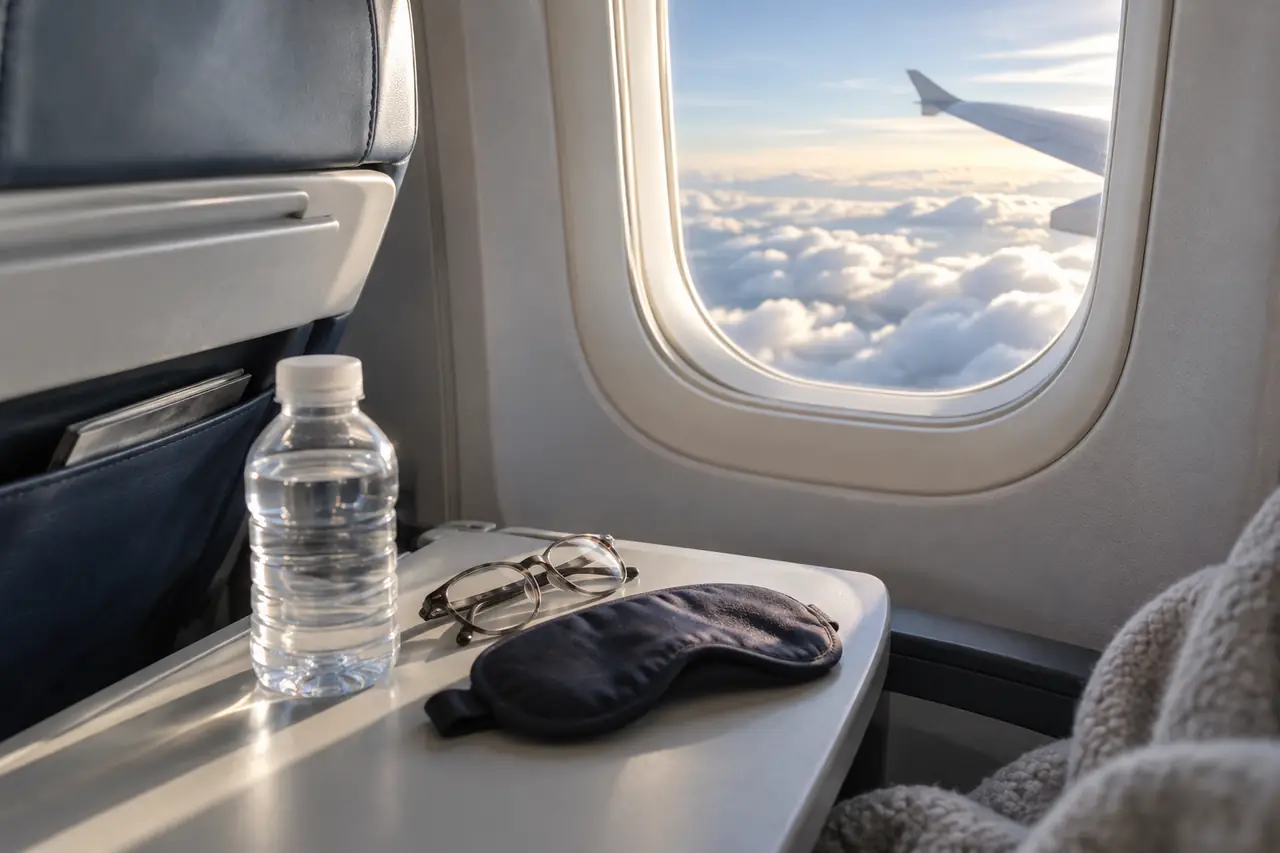
A few hours into a flight, many people notice their eyes feel dry, gritty or tired. The American Academy of Ophthalmology (AAO) puts it plainly: everyone's eyes dry out on airplanes. It lists airplanes alongside large office buildings and shopping centres as low-humidity places that can dry the eyes.
You can't change the cabin air, but a little planning helps.
If you use drops on the plane, how to put in eye drops covers the steps, and dry eyes at work has habits that also suit a long trip with a laptop.
Why flights dry your eyes
- Low humidity. The AAO lists airplanes among low-humidity places.
- Moving air. The overhead vent blows straight at your face.
- Screens and reading. Seat-back films and phones reduce blinking.
- Sleep. Napping in contact lenses, or with eyes not quite closed, adds to dryness.
What to pack in your hand luggage
- Lubricating eye drops (approved for contact lenses if you wear them)
- Your glasses, even if you plan to wear contacts
- Contact lens case and solution, in a travel-size bottle
- Any prescription eye drops, plus a spare unopened bottle
- A spare pair of glasses or lenses for the trip
The AAO suggests bringing two pairs of glasses on every trip, and an extra pair of contacts if you wear them. It also suggests packing two bottles of lens solution in case one spills. The American Optometric Association (AOA) notes that full-size solution bottles must be declared at security, and advises against pouring solution into a smaller container.
During the flight
- Turn the vent awayThe AOA suggests directing air vents away from your eyes.
- Use dropsThe AAO suggests over-the-counter lubricating drops during the flight.
- Lenses out to napTake contacts out before you sleep, and store them in solution in their case.
- Take screen breaksLook up from the film now and then and blink fully.
Contact lenses in the air
The AOA says many people find glasses most comfortable on planes, especially on long flights. If you do wear lenses, the AAO has some specific advice:
- If your eyes feel uncomfortable, take your lenses out and store them in sterile solution in their case. The AAO notes that cabin crew have thrown away cups with contact lenses in them.
- Never store contacts in water. The AAO says water isn't sterile and can contain organisms that cause serious eye infections.
- Don't sleep in your lenses. See contact lens habits.
At your destination
Hotel rooms with air conditioning and dry climates can carry on where the cabin left off. The ideas in dry eyes in the morning and dry eyes in winter apply here too: keep vents off your face and add some moisture to the air if you can.
The AAO also reminds travellers not to assume a prescription from one country can be filled in another, and to check before you go that your drops are available where you're heading.
Don't wait if something's wrong
The AAO advises not putting off seeing an ophthalmologist while travelling, because dealing with small problems early keeps them small, and not ignoring changes to your vision even if they don't hurt.
- Dryness lasts for days after the flight
- Your eyes stay red or sore
- Drops don't make a difference
- A red, painful eye, especially with contact lenses
- Sudden changes to your vision
- Flashes of light or new floaters
Read more by topic
Common questions
Why do my eyes get dry on planes?
Cabin air is low in humidity. The American Academy of Ophthalmology says everyone's eyes dry out on airplanes, and vents and screens add to it.
Can I wear contact lenses on a plane?
Yes, but the American Optometric Association says many people find glasses more comfortable, especially on long flights. Take lenses out before napping and store them in solution in their case, never in water.
What should I pack for my eyes when flying?
Lubricating drops, your glasses, your lens case and travel-size solution, any prescription drops plus a spare bottle, and a spare pair of glasses or lenses.
Can I take eye drops through airport security?
The American Optometric Association notes that full-size contact lens solution must be declared at security and advises against pouring solution into a smaller container. Check your airline's and airport's rules before you travel.
What if my eyes are still sore after the flight?
If dryness or redness lasts for days, see an optometrist. A red, painful eye, especially with contact lenses, needs care the same day.
Sources
End of article