





Dry eyes in winter: heating, wind and cold air
Cold wind outside and heated air inside can both dry the eyes. Simple changes indoors and out, and when winter dryness needs an eye exam.
New articles by email
One email a week.
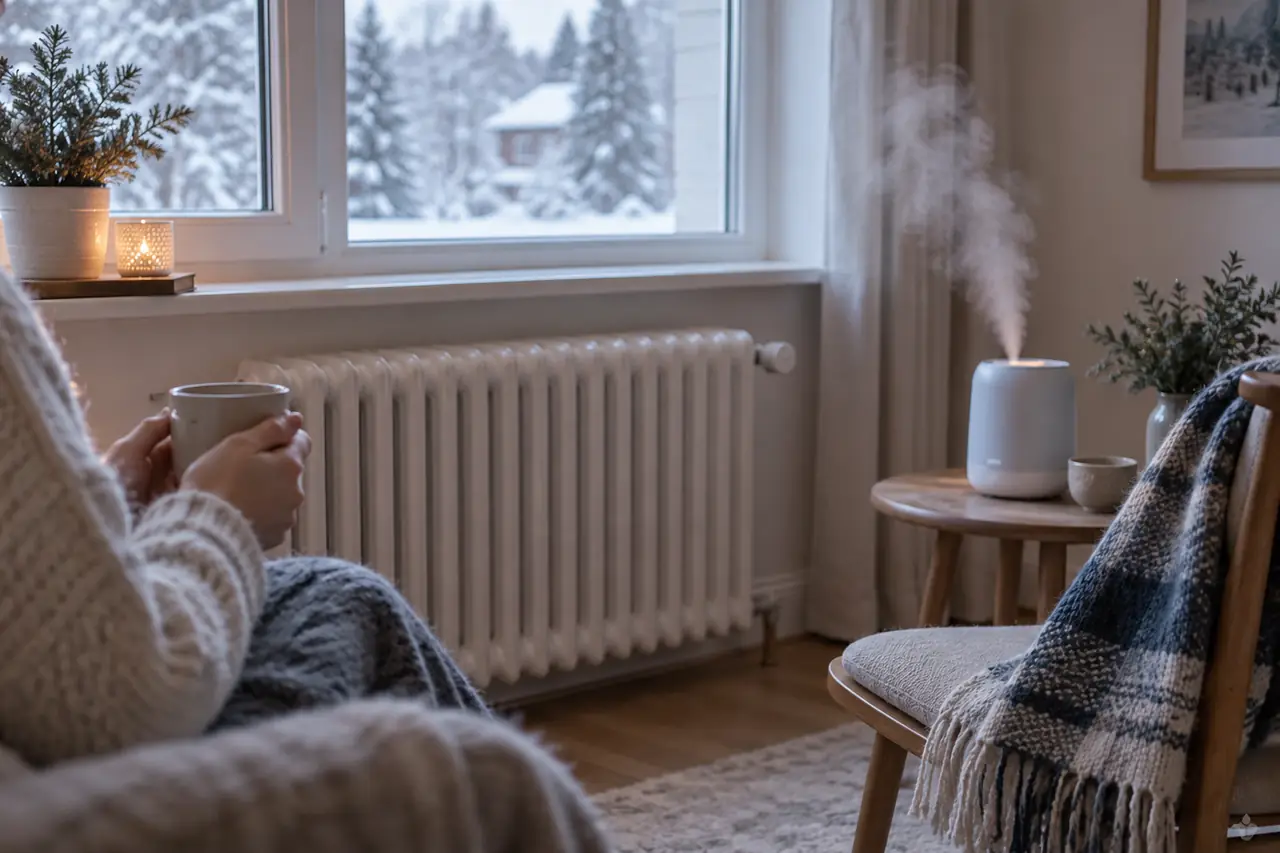
Winter is hard on eyes from both sides. Outdoors, cold wind dries the surface of the eye. Indoors, heating warms the air and lowers its humidity. The American Academy of Ophthalmology (AAO) lists wind, very dry air and very warm rooms among the things that make dry eye worse, and notes that indoor humidity drops when heating runs hard in extreme weather.
If you use drops, how to put in eye drops covers the steps, and why your eyes water explains why dry eyes can stream in cold wind.
Why your eyes may water outside and feel dry inside
Cold wind often makes eyes water. The NHS lists cold air and wind among the normal reasons eyes water. Then you come inside to a warm, dry room and the same eyes feel gritty. Both are your eyes responding to the air around them. The AAO also explains that irritated, dry eyes can produce extra tears, so watering and dryness can go together.
Indoors
- Avoid very warm rooms where you can
- Add moisture near heaters (a humidifier, or a pan of water near a radiator)
- Point car and room vents away from your face
- Keep up screen breaks and full blinks
- Wear wraparound glasses or sunglasses in the wind
- Turn your back to strong gusts
- Don't rub cold, watering eyes
- Take contact lenses out if they feel dry and uncomfortable
The AAO also suggests avoiding hair dryers where possible, since they blow hot, dry air toward the face. The American Optometric Association (AOA) suggests lowering the heat, aiming vents away from your eyes and closing the windows in the car.
Winter screen time
Dark evenings mean more time indoors, and often more time at screens. The AAO notes that reading, computer use and watching TV reduce blinking, which adds to dryness. Breaks and deliberate blinks matter more when the air is dry. See how often you blink and the screen break timer.
At night
Heating left on overnight dries the bedroom air. If you wake with dry, scratchy eyes, the AAO mentions using a thicker lubricant before bed. See dry eyes in the morning for bedroom changes.
Other winter factors
- Colds and medicines. The AAO lists some cold remedies and sedatives among medicines that can dry the eyes. A pharmacist can advise.
- Air travel. Holiday flights mean hours in dry cabin air. See dry eyes when flying.
Who tends to notice it more
The AAO lists several things that make dry eye more likely at any time of year: getting older, hormonal changes (dry eye is more common in women, especially after menopause), some health conditions such as thyroid disease and rheumatoid arthritis, long-term contact lens wear and laser eye surgery. Winter conditions can tip eyes that are already on the dry side into feeling uncomfortable. If that sounds like you, mention it at your next eye test.
Noticing the pattern
If your eyes are worse in winter, a few weeks of notes can show which settings matter most: the office, the car, the bedroom or outdoors. Note the room, the heating and how your eyes feel. A journal like Ocufuse can hold these notes, and our dry eye diary guide has a simple layout.
When to see someone
The AAO advises seeing an eye doctor if dryness is persistent, getting worse or affecting daily activities, if over-the-counter lubricating drops don't help, or if you have significant redness, pain or vision changes.
Read more by topic
Common questions
Why are my eyes drier in winter?
Cold wind outdoors and heated, dry air indoors both dry the surface of the eye. The American Academy of Ophthalmology notes indoor humidity drops when heating runs hard.
How do I stop my eyes drying out from central heating?
The American Academy of Ophthalmology suggests avoiding very warm rooms and adding moisture near heaters, with a humidifier or a pan of water near a radiator. Keep vents pointed away from your face.
Why do my eyes water outside in the cold?
The NHS lists cold air and wind among the normal reasons eyes water. Wraparound glasses can keep some wind off your eyes.
Can cold medicines dry your eyes?
The American Academy of Ophthalmology lists some cold remedies, sedatives and allergy pills among medicines that can dry the eyes. Ask a pharmacist, and don't stop a prescribed medicine without advice.
When should I see someone about winter dry eyes?
If dryness is persistent, getting worse or affecting daily life, if drops don't help, or if you have redness, pain or vision changes.
Sources
End of article