





How often should you wash a sleep mask?
No health body sets a schedule. Washing it as often as your pillowcase, often weekly, is a sensible habit, and right away after an eye infection.
New articles by email
One email a week.
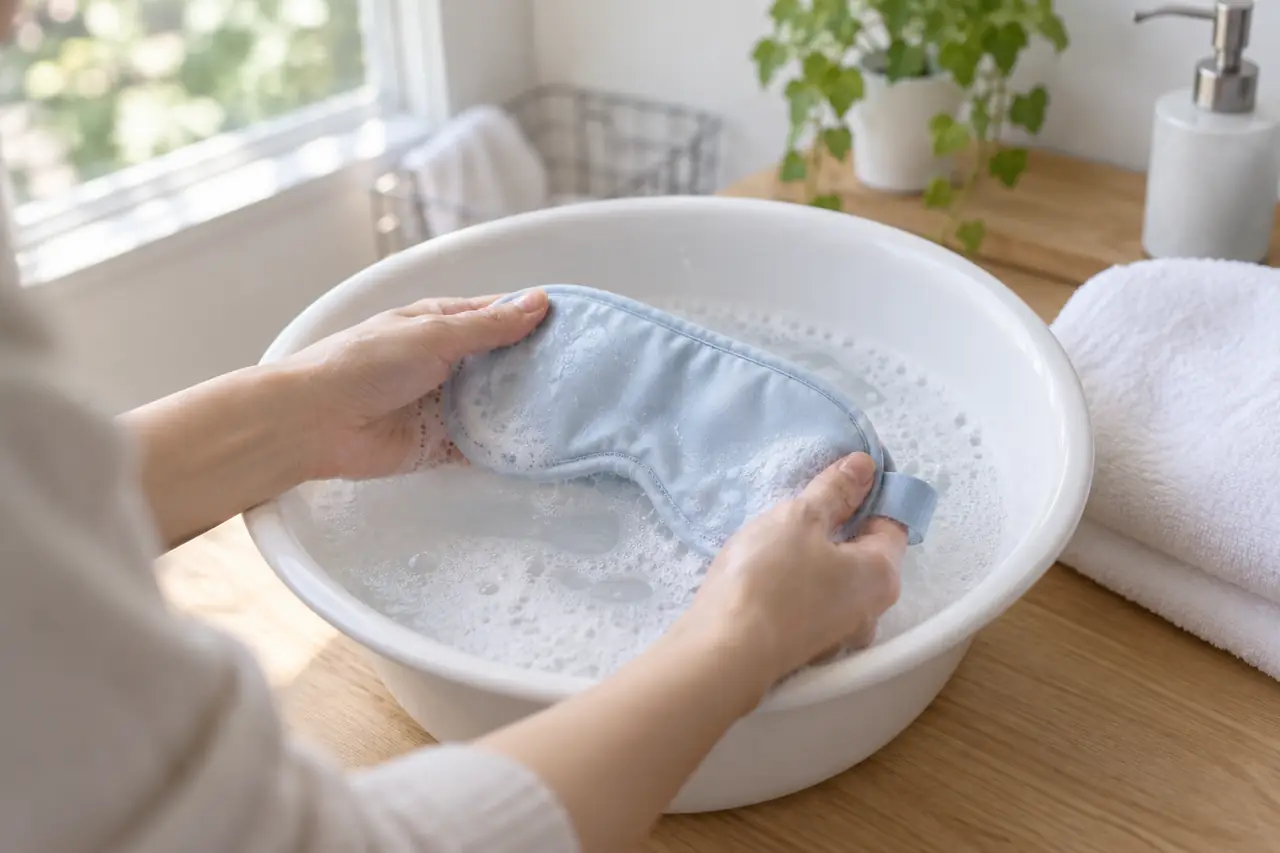
No health body sets an exact schedule for sleep masks, but washing yours about as often as your pillowcase, which for many people is once a week, is a sensible habit. Wash it sooner if it's been in contact with sweat, makeup or night creams, and always before using it again after an eye infection.
A common question goes like this: I've used the same mask every night for a year and never washed it, because it doesn't look dirty. Is that a problem? Masks rarely look dirty, but they spend a third of the day pressed against the skin around your eyes.
For makeup habits around the eyes, see eye makeup and eye hygiene. For choosing a mask that fits, see is it bad to sleep with a sleep mask every night.
Why a mask needs washing at all
A medically reviewed guide from All About Vision notes that sleep masks collect sweat, oil, makeup and dirt. It links unwashed masks with skin irritation and breakouts, and says they may possibly play a part in eye infections. It suggests washing your mask regularly following the maker's care instructions.
The CDC's advice on preventing pink eye is a useful comparison. It says to wash pillowcases, sheets, washcloths and towels often in hot water and detergent. A sleep mask sits even closer to your eyes than a pillowcase, so it makes sense to treat it at least the same way.
A simple washing rhythm
These are practical habits rather than official numbers. Adjust them to how you use your mask.
- Every week or so: if you wear it nightly with clean skin and no products.
- Every few days: if you sweat at night, sleep in a warm room or put on eye cream, moisturiser or oil before bed.
- After travel: when it's been in a bag, on a plane seat or in a hotel.
- Straight away: if makeup has rubbed onto it, if it's been dropped somewhere dirty, or after any eye infection.
If you wear a mask every night, having two means one can be drying while you wear the other. A mask that's still damp can feel clammy and is harder to keep fresh.
How to wash different kinds of mask
The care label is the final word, because materials and fillings vary. As a general guide:
- Often hand wash in lukewarm water
- Some cotton masks can go in a wash bag
- Mild, unscented detergent
- Rinse well, press out water in a towel
- Air dry flat
- Usually hand wash only
- Squeeze gently, don't wring
- Some have a removable cover to wash
- Air dry fully before wearing
- Keep away from direct heat
- Usually wipe the surface only
- Don't soak or put in a machine
- Remove any cover and wash that
- Unplug electric masks first
- Replace if the cover splits or leaks
Rinse soap out thoroughly. Leftover detergent sitting near your eyes all night can feel irritating, and a strongly scented product doesn't help either.
Washing doesn't make a mask last forever. It's time for a new one when the strap has stretched so far that you have to pull it tight, the foam has flattened so the cups touch your eyelids, the fabric has gone rough or bobbly, or a smell comes back soon after washing. A worn strap is worth noticing in particular, because tightening a tired mask is a common way to end up with pressure on the eyes.
Makeup, night creams and the mask
Makeup is one of the main things that ends up on a mask. The American Academy of Ophthalmology advises removing all eye makeup at night, especially mascara, which can stick to the lashes, and using a clean cotton swab along the base of the lashes for the last bits, without getting remover in the eye. The AAO also suggests throwing eye makeup away three months after buying it.
- Eye makeup fully removed, lash line included
- Night creams kept away from the eye area or given time to sink in
- Clean, dry hands when you put the mask on
- A mask that's been washed in the last week or so
If you use skincare at night, letting it absorb for a few minutes before you put the mask on means less of it ends up in the fabric.
After an eye infection, and why not to share
The CDC says not to share personal items such as pillows, washcloths, towels, eye drops, eye or face makeup and makeup brushes. A sleep mask belongs on that list in spirit, so it's best kept to one person.
If you've had an eye infection, the CDC advises throwing away disposable products you used while your eyes were infected and cleaning reusable ones as directed. For a mask, that means washing it before you wear it again, or replacing it if it can't be washed. The FDA advises throwing away eye cosmetics you were using when an infection started, and not wearing eye makeup until the area has healed.
Read more by topic
Common questions
How often should I wash my sleep mask?
There's no official number. A practical habit is to wash it as often as your pillowcase, often once a week, and more often if you sweat, sleep in skincare or have makeup residue.
Can I put a sleep mask in the washing machine?
Some fabric masks can go in a wash bag on a gentle cycle; many silk, foam and contoured masks are hand wash only. Gel and heated masks usually just get a surface wipe. Check the care label.
Should I wash my sleep mask after pink eye?
Yes. The CDC advises cleaning reusable items as directed and not sharing personal items like pillows and towels. Wash the mask, or replace it if it can't be washed, before wearing it again.
Is it OK to share a sleep mask?
It's best not to. The CDC lists pillows, washcloths, towels and eye makeup among personal items not to share, and a mask sits in the same place on your face.
Sources
End of article