





How to clean glasses without scratching them
Rinse off grit first, wash with a drop of mild dish soap, dry with a clean microfiber cloth. Skip shirts, tissues and paper towels.
New articles by email
One email a week.
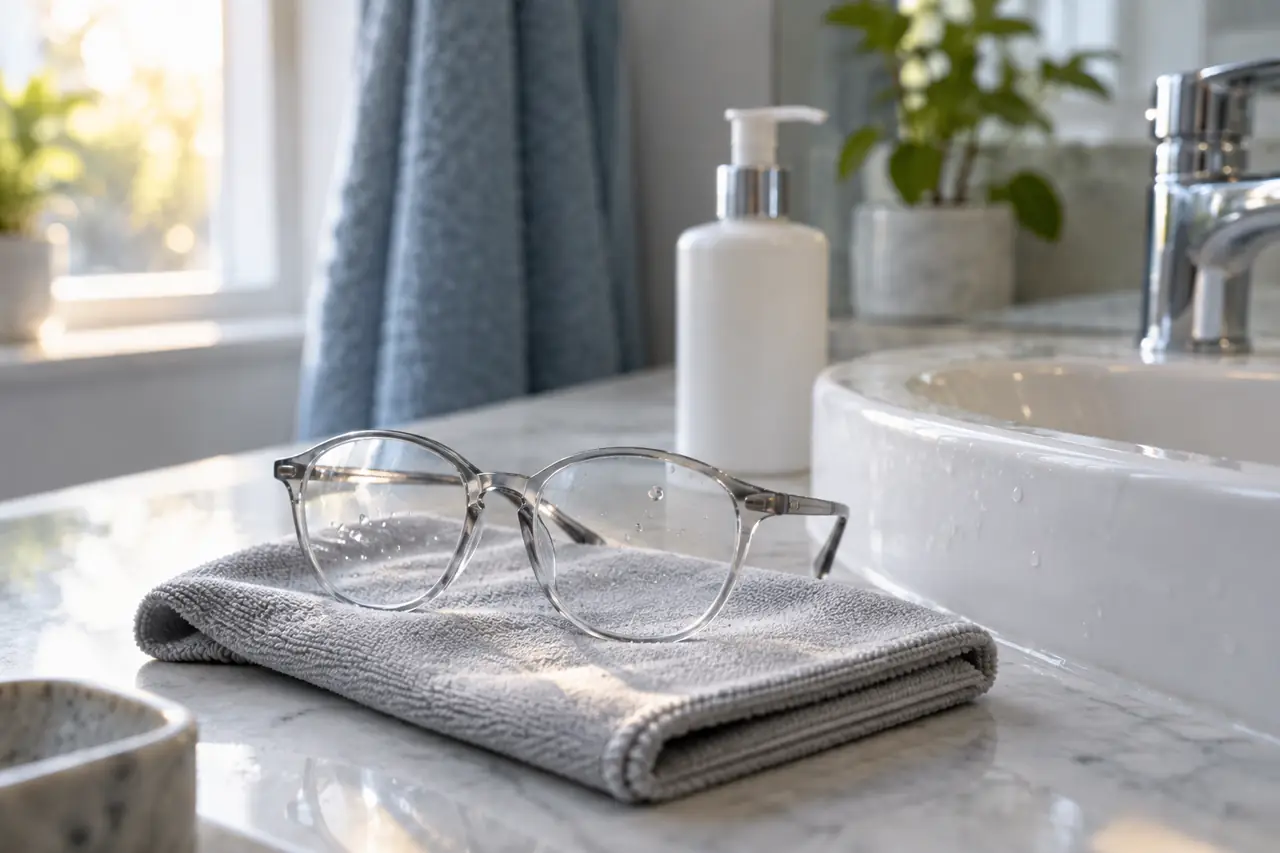
Rinse first, then wash, then dry. Run your glasses under lukewarm water to float off dust and grit, rub a small drop of mild dish soap over both sides of each lens with your fingertips, rinse it all away and dry with a clean microfiber cloth.
A common question goes like this: I clean my glasses several times a day with whatever is nearby, my sleeve, a tissue, the hem of my shirt, and after a few months the lenses look hazy and covered in fine lines, so what am I doing wrong? Almost always, the answer is rubbing dry grit across the lens. Most scratches come from the cleaning, not from the day.
If your lenses are fine but your eyes still feel tired at the desk, see screen glare and brightness at your desk. For what the numbers on your prescription mean, see how to read your glasses prescription.
Why glasses get scratched
Lenses pick up dust, skin oil, make-up and tiny bits of grit through the day. Wiping a dry lens pushes those particles across the surface like fine sandpaper. That's why the habit people find quickest, a quick rub with whatever fabric is to hand, is also the one that does the most damage over time.
Cleveland Clinic gives three clear don'ts: don't use paper products such as tissues, napkins or paper towels, which can scratch lenses or damage their protective coatings; don't wipe them with your clothing, whose fibres can scratch or scuff lenses; and don't leave them lying around where something can scratch them.
Most modern lenses also carry thin coatings, such as an anti-reflective layer that cuts glare. The American Academy of Ophthalmology (AAO) describes how these reduce glare and let more light through. They're worth protecting, because a coating that wears or scratches can't simply be wiped back to new.
Step by step: the sink method
- Wash your handsSkin oil and hand cream end up on the lenses otherwise.
- Rinse the glassesHold them under lukewarm running water to float off dust and grit before anything touches the lens.
- Add one small drop of mild dish soapCleveland Clinic lists mild dish soap and water. A plain soap without added lotion rinses off more cleanly.
- Rub gently with your fingertipsBoth sides of each lens, the nose pads and the frame where it touches your skin. No cloth yet.
- Rinse wellLeftover soap dries into streaks.
- Shake off the water and dryUse a clean microfiber or other lint-free cloth, as Cleveland Clinic suggests. Blot first, then wipe lightly.
If you're away from a sink, a mild lens cleaning spray works the same way: spray both sides generously so the liquid carries grit off, then dry with a clean cloth. Cleveland Clinic suggests asking your eye doctor or optician which cleaners are safe for your particular lenses.
Wipes, sprays and the cloth itself
Pre-moistened lens wipes are useful in a bag or a car. The AAO notes, though, that some lens wipes can scratch plastic lenses or damage coatings, particularly lower quality ones, ones used in the wrong way, or when grit or sand is already on the lens. If you've been outside on a windy or sandy day, rinse before you wipe.
The microfiber cloth is only as clean as its last wash. Over a few weeks it collects oil and the same grit you were trying to remove, and starts to smear rather than clean. Keep two or three and wash them regularly with plain detergent. Many opticians suggest skipping fabric softener, which can leave a film that smears across the lens. If a cloth has been on the floor or in a pocket with keys, swap it for a clean one.
Household glass cleaners and other strong products are made for windows, not for coated lenses. If you're not sure about a product, stick to soap and water.
Everyday habits that save the lenses
- Put the glasses in a hard case whenever they're off your face.
- Never set them down lens side down on a table or desk.
- Take them off with both hands, so the frame doesn't twist.
- Keep them out of pockets and bags without a case.
- Rinse before wiping after a windy, dusty or beach day.
The case advice is the same for adults and children. An NHS children's eye service explains that lenses scratch easily and should go into a case whenever they come off.
What to do about scratches you already have
The AAO says light scratches don't change your prescription or the protective features of the lens, though they can be distracting if they sit right in your line of sight. Heavy scratches or worn coatings are different: they can reduce how clearly you see and may lower UV protection. The AAO also notes that lower quality lenses and coatings scratch more easily and may need replacing sooner.
Scratch repair kits and home remedies tend to work on the coating rather than the scratch, and can leave the lens worse. If the marks bother you, take the glasses back to the optician who supplied them. They can tell you whether the lenses can be cleaned up or need replacing, and whether the lenses came with a warranty that covers scratches.
If your vision seems blurry even with clean, unscratched lenses, or it changes in a way you've not noticed before, book an appointment with an eye care professional rather than putting it down to the glasses.
Read more by topic
Common questions
Can I clean my glasses with my shirt?
It's better not to. Cleveland Clinic says fibres in clothing can scratch or scuff lenses, and a shirt also tends to carry dust that gets dragged across the surface.
Is dish soap safe for glasses?
Cleveland Clinic lists mild dish soap and water, or a mild cleaning spray, as ways to clean glasses. Use a small drop of a plain soap without lotion added, and rinse it all off.
Are lens wipes OK?
They're handy away from a sink, but the American Academy of Ophthalmology notes that some wipes can scratch plastic lenses or damage coatings, especially low quality ones or when there's grit or sand on the lens.
Can scratches be polished out?
Light scratches don't change your prescription, according to the AAO, but heavy scratches or worn coatings can make vision less clear. Ask the optician who made the lenses what they suggest.
Sources
- Cleveland Clinic: Eyeglasses (glasses), how they work and types
- American Academy of Ophthalmology: Do scratched lenses affect your prescription or coating?
- American Academy of Ophthalmology: How to choose eyeglasses for vision correction
- Bedfordshire and Luton Children's Community Eye Service (NHS): Parents' guide to glasses
End of article