



What should you do if you fell asleep with your contacts in?
Eye care sources say to take the lenses out gently, give your eyes a break from lenses, and contact an eye doctor if you notice pain, redness or blurring.
New articles by email
One email a week.
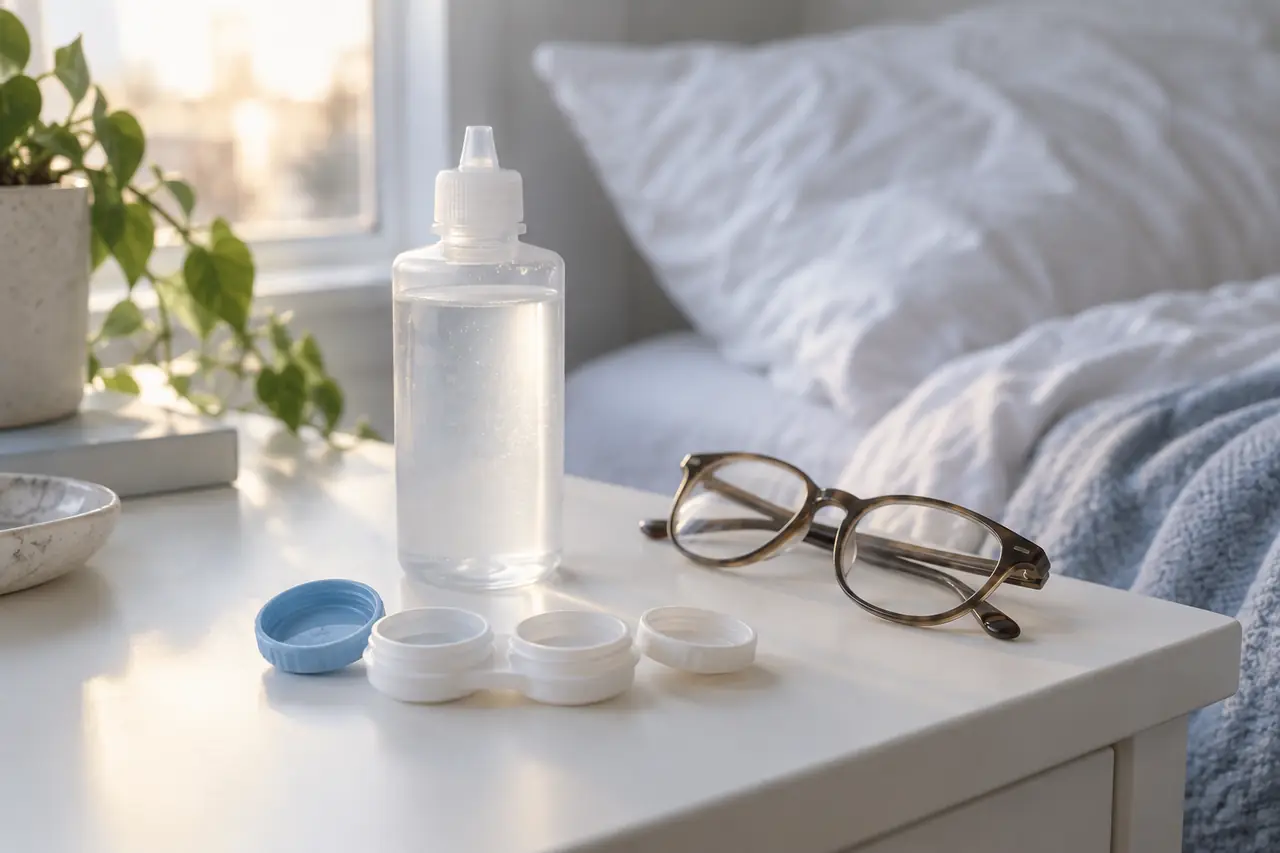
Take the lenses out gently, give your eyes a break from lenses for the day if you can, and keep an eye on how they feel. The CDC says sleeping in contact lenses raises the risk of an eye infection six to eightfold, so pain, redness, discharge, light sensitivity or blurring afterwards are a reason to contact an eye care professional quickly.
A common question goes like this: I fell asleep on the sofa with my monthly lenses in and woke up six hours later with dry, scratchy eyes. Do I just take them out and carry on? This article describes what eye care sources say in general. It can't tell you what's right for your eyes, and if you've been given specific instructions by the person who fitted your lenses, follow those.
For the everyday habits behind lens safety, see contact lens habits that lower infection risk. If your vision is hazy when you wake up, blurry vision in the morning covers the common reasons.
Why sleeping in lenses is different from wearing them all day
The cornea, the clear front window of the eye, gets its oxygen from the air, dissolved in the tear film. Cleveland Clinic explains that a lens left in overnight adds a barrier to that oxygen at a time when your eyes are closed and making fewer tears. Lenses can also dry out and trap germs against the eye.
The numbers behind the warning come from the CDC. About a third of contact lens wearers say they sleep or nap in their lenses, and doing so raises the risk of contact lens related eye infections six to eightfold. A 2018 CDC report described six people who developed corneal infections after sleeping in lenses. Several had lasting damage to their eyes, and two needed corneal transplants. These cases are rare, but they're why every major eye care body says the same thing.
Taking the lenses out after you wake up
A lens that has been in all night can feel dry and tight. Cleveland Clinic suggests not rushing to pull it out, and describes these steps:
- Wait a momentBlink a few times and let your eyes get some moisture back before you touch the lens.
- Try to ease it out gentlyDon't pull or pinch hard, which can irritate the eye more.
- Add solution if it's stuckPut a couple of drops of contact lens solution in the eye and blink a few times.
- Try againThe extra moisture should help the lens move. If it still won't come out, contact an eye care professional.
- Give your eyes the day offWear glasses for the rest of the day if you can.
If you wear daily lenses, throw that pair away. For reusable lenses, clean and store them as your lens care instructions say, but the FDA is clear that if your eyes show signs of irritation or infection, you shouldn't put those lenses back in.
Symptoms that mean contacting an eye care professional
Many people feel some dryness for a while after sleeping in lenses. What sources say to watch for is anything beyond that, or anything that gets worse rather than settling. The FDA lists these as signs of eye irritation or infection in lens wearers:
- Discomfort or pain
- Excess tearing or other discharge
- Unusual sensitivity to light
- Itching, burning or a gritty feeling
- Unusual redness
- Blurred vision
- Swelling
For any of these, the FDA says to remove your lenses straight away, not to put them back in, and to contact your eye care professional right away. The CDC's general advice is the same: take the lenses out and contact your eye care provider if you have discomfort. Bring your lenses and case with you if you go in, and say how long you slept in them.
What about lenses sold for overnight wear?
Some lenses are approved for extended or overnight wear. The CDC says to avoid sleeping in lenses unless your eye care provider has told you to. Cleveland Clinic notes that approval doesn't guarantee they'll suit everyone's eyes, and the AAO says the higher infection risk applies to extended wear lenses too. If you often fall asleep in your lenses, that's a good thing to bring up at your next lens check, since the person who fits your lenses can talk through options for your habits.
A few small habits make accidental naps less likely: keeping your case and solution by the bed or the sofa, wearing glasses on evenings you know you'll be tired, and wearing glasses on long flights or drives where you might doze off.
When to get help
If your eyes feel normal again within a few hours and you notice none of the signs above, Cleveland Clinic suggests simply giving them a rest from lenses for the day. If anything feels off, or you're unsure, contact an eye care professional rather than waiting to see. Eye pain, redness with light sensitivity, or a change in your vision after sleeping in lenses are reasons to contact one promptly.
Read more by topic
Common questions
I napped in my contacts for an hour. Is that a problem?
Cleveland Clinic says falling asleep for any amount of time raises the risk of irritation or infection, so a nap counts too. Take the lenses out, give your eyes a rest and watch for symptoms.
My lens feels stuck after sleeping. What do sources suggest?
Don't pull at it. Cleveland Clinic suggests a few drops of contact lens solution, blinking a few times, and then trying again gently once the lens has some moisture back.
Can I put a fresh pair in straight away?
Cleveland Clinic suggests taking a full day off lenses if you can and wearing glasses instead. The FDA says that if you have signs of irritation or infection, you shouldn't put the lenses back in and should contact your eye care professional.
Which symptoms mean I should call an eye doctor?
The FDA lists discomfort, excess tearing or discharge, unusual light sensitivity, itching, burning or grittiness, unusual redness, blurred vision, swelling and pain. Cleveland Clinic says to get in touch right away if you notice signs of infection or changes in your eyesight.
Sources
- Cleveland Clinic: What does sleeping in your contacts do to your eyes?
- CDC, MMWR (2018): Corneal infections associated with sleeping in contact lenses, six cases, United States, 2016 to 2018
- CDC: Preventing eye infections when wearing contacts
- U.S. Food and Drug Administration: Contact lens risks
- American Academy of Ophthalmology: Why you should never sleep in your contact lenses
End of article